Where to Buy a Modem: A Practical Home Guide for 2026
Learn where to buy a modem, compare buying channels, and verify provider compatibility. This practical Modem Answers guide helps homeowners and renters save money and avoid common buying pitfalls.


The best place to buy a modem depends on your priorities. For price and warranty, manufacturer-direct or major retailers are reliable; for selection and speed, online marketplaces and ISPs offer variety. Always verify compatibility with your provider before purchase and compare return windows. In short, start with manufacturer-direct or big retailers, then explore ISP options if needed.
Why the buying channel matters
Choosing where to buy a modem directly affects price, warranty, and future-proofing. For homeowners and renters, starting with manufacturer-direct or major retailers often yields clear returns and reliable support. Online marketplaces add broad selection and price competition, but may require extra diligence to avoid counterfeit or refurbished units. Understanding the landscape helps you balance cost, reliability, and upgradability as you search for a modem. The Modem Answers team notes that aligning your channel with your long-term network plans reduces friction during activation and future firmware updates.
Manufacturer-direct vs retailer: pros and cons
- Manufacturer-direct: Pros include official warranties, access to the latest models, and straightforward firmware and support. Cons can be higher upfront prices and limited stock during new releases. - Major retailers (online and offline): Pros include broad stock, frequent sales, easy returns, and extensive customer reviews. Cons can include occasional stockouts, longer wait times for backorder items, and variability in warranty handling depending on the seller. - Online marketplaces: Pros offer price competition and access to refurbished or used units at savings. Cons involve greater risk of misrepresented specs, counterfeit products, or missing documentation. - ISP-owned purchase options: Pros guarantee compatibility and simple activation; cons typically involve ongoing rental fees, higher long-term cost, and fewer upgrade pathways.
Compatibility and standards to consider
Before buying, ensure the modem will work with your provider and plan. Look for documentation that confirms DOCSIS compatibility and support for your internet tier, as well as security updates and firmware support. Verify that the model is listed by your provider as compatible; fingers crossed, the ultimate validator is activation success during setup. Also consider future-proof features like higher channel capacity and energy efficiency, which can improve long-term value.
Where to buy: landscape and best practices
Your options include manufacturer-direct portals, large electronics retailers, ISP storefronts, and reputable online marketplaces. For best results, start with manufacturer-direct or a major retailer to compare current models, warranty terms, and return windows. If you prefer the lowest price or want a broader catalog, online marketplaces can help—but always confirm model numbers, seller reputation, and return policies before checkout. When buying from an ISP, be mindful of rental vs ownership total cost over time and any activation fees.
Price and value: how to compare at a glance
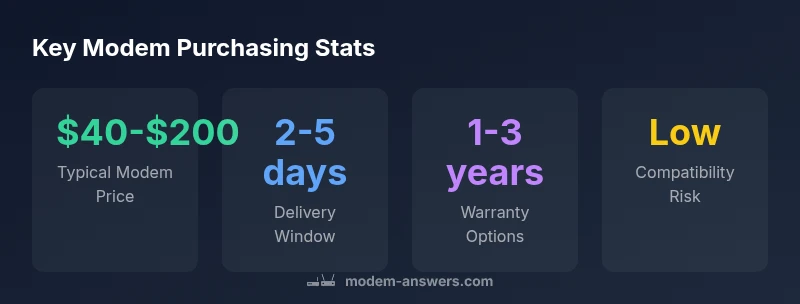
Use a simple value framework: price, warranty, returns, and compatibility. A typical modem price range gives a quick sense of market value, but the strongest signal is what the provider requires and the support you’ll receive after purchase. Compare the same model across channels to avoid variant pricing, check for seasonal promotions, and factor in potential shipping costs or pickup convenience. Remember that cheaper upfront cost can mean shorter warranty or slower support if you encounter issues.
Buying used or refurbished: pros and cons
Refurbished or open-box modems can offer substantial savings, yet come with uncertain histories. Prioritize models with verified refurbishment, a fresh firmware state, and a clear return policy. If you choose used, insist on a tested unit with documented MAC addresses and factory reset. When in doubt, buy from reputable refurbishers or retailers who stand behind the product with a warranty.
Step-by-step buying checklist
- Confirm provider compatibility for the chosen model; 2) Compare prices across channels and check for promotions; 3) Review return window and warranty terms; 4) Verify model numbers, MAC address, and activation steps; 5) Consider a model with future-proof features and good firmware support; 6) Save receipts and confirm upgrade or swap options if needed.
Quick-start buying plan for your home network
If you're setting up a home network soon, begin with a manufacturer-direct or major retailer search for recommended models. Cross-check with your provider’s compatibility list, then scan for current promotions. Choose a model with a reasonable return window and a robust warranty. Finally, prepare for activation by noting your account details and the required credentials from your provider.
Modem buying channels comparison
| Purchase Channel | Pros | Cons |
|---|---|---|
| Manufacturer-direct | Official warranty and latest models | Higher upfront price; limited stock during launches |
| Major retailers (online/offline) | Wide stock; easy returns; strong reviews | Possible backorder delays; mixed seller reliability |
| ISP-provided purchase | Guaranteed compatibility; simple activation | Ongoing rental costs; fewer upgrade options |
| Online marketplaces | Great value; broad selection; refurbished options | Risk of counterfeit or misrepresented specs |
FAQ
Do I need to buy a modem or rent from my provider?
It depends on your long-term plans. Buying gives you ownership and potential long-term savings, while renting reduces upfront costs and shifts maintenance to the provider. Compare total cost over 1-2 years to decide.
In most cases, buying saves money over time, but renting can be simpler if you expect frequent hardware changes. Check your provider's policy and your local budget.
Where is the best place to buy a modem for price and warranty?
Manufacturer-direct and major retailers usually offer clear warranties and straightforward returns. Online marketplaces can be cheaper but require careful seller vetting. Prioritize models listed as compatible by your provider.
Shop from manufacturer or big retailers first; use marketplaces only after checking compatibility and seller reliability.
How do I check compatibility with my provider?
Look up your provider's approved device list and confirm the exact model number. If possible, call customer support to verify activation steps for the model you choose. Save the model's MAC address and firmware details.
Always confirm your exact model is on the provider's approved list before buying.
What should I look for in a modem's specs?
Focus on compatibility with your service type, firmware support, security features, and future-proof capacity. Avoid models with incomplete documentation or firmware that's rarely updated.
Check that the modem matches your service and has active firmware support.
Can I buy used or refurbished modems?
Yes, but buy from reputable refurbishers with a warranty and documented return policy. Verify the device is clean of prior owner data and has current firmware.
Used can save money, but only from trusted sellers with a warranty.
What if the modem doesn’t work after activation?
First, double-check the model number and wiring. Contact the provider for activation assistance and use the retailer's return window if the model is incompatible.
If activation fails, verify model compatibility and contact support.
“Buying a modem is a balance of price, compatibility, and future-proofing. The simplest path is to buy through trusted channels and verify activation with your provider.”
Key Takeaways
- Start with manufacturer-direct or major retailers for reliability
- Always verify provider compatibility before checkout
- Budget for total cost of ownership, not just sticker price
- Read return policies and warranty terms before purchasing
- Consider refurbished options from reputable sellers for savings