Who Sells Modems: Your 2026 Buying Guide
Discover who sells modems and where to buy in 2026. Compare ISPs, electronics retailers, and online marketplaces with practical tips from Modem Answers.


Who sells modems? The primary sellers are internet service providers (ISPs), electronics retailers, and online marketplaces. ISPs often offer equipment as part of service bundles, while electronics stores stock a wide range of modems from major brands. Online marketplaces provide variety and user reviews, making price comparisons easy. For homeowners and renters, understanding these channels helps you pick the right device.
Who sells modems
In the landscape of consumer networking, knowing who sells modems is the first step to a smart purchase. According to Modem Answers, there are three primary channels: internet service providers (ISPs), electronics retailers, and online marketplaces. ISPs often offer gateways and modems as part of service bundles or rental programs; this can simplify setup but may lock you into their service terms. Electronics retailers, including big-box stores and specialty shops, stock a wide range of modem models, from simple DOCSIS 3.0 devices to current DOCSIS 3.1 and 4.0 options. Online marketplaces expand your choices further, with new, refurbished, and used units, along with extensive user feedback. For homeowners and renters, the buying process is about aligning device compatibility with your internet plan, budget, and future-proofing needs. The Modem Answers team recommends starting with your provider’s supported devices, then exploring retailer inventories to compare price, warranty, and return policies.
Primary sales channels
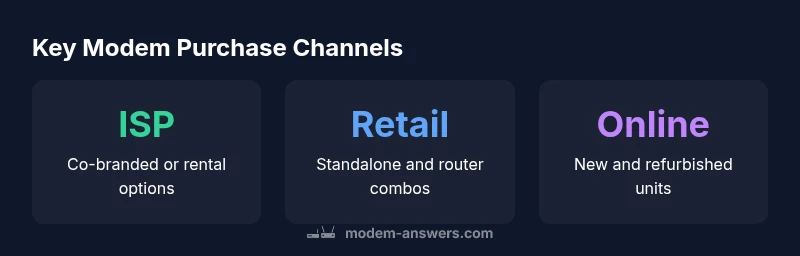
Three main channels shape modem buying: ISPs and their partner stores, electronics retailers, and online marketplaces. ISPs often offer equipment as part of service contracts, with the option to rent or purchase outright. Electronics retailers provide a broad spectrum of models, from budget friendly to high-end, often with in-store staff who can help with compatibility questions. Online marketplaces give access to a wide array of brands, including new and refurbished units, along with user reviews that help gauge reliability and performance. Modem Answers recommends cross-checking models across at least two channels to surface price differences, warranty terms, and return policies, while ensuring the device is compatible with your provider.
What to look for when buying
Buying a modem involves matching several core specifications to your home network and provider. First, confirm provider compatibility and required DOCSIS standard (for cable internet) or DSL compatibility. Second, decide between a standalone modem and a modem-router combo based on your space, preferred network management, and future-proofing goals. Third, review the modem's hardware features—ports, USB options, and built-in Wi-Fi if choosing a router combo. Fourth, check warranty length and service support options. Lastly, compare energy efficiency and physical size for your living space. Throughout, track price trends across channels and confirm return policies before purchasing.
ISP vs retailer buying scenarios
If you anticipate upgrading your service or changing plans, buying through the ISP can simplify setup and warranty processes but may tie you to their equipment terms. Retail purchases offer flexibility across brands and models, yet you’ll need to ensure the device is on the provider’s approved list. Online marketplaces can be the best for price variety and user feedback, but verify that the seller offers a valid warranty and a straightforward return window. Modem Answers notes that blending channels—checking an ISP list and then shopping at electronics stores or marketplaces—often yields the best balance of price and reliability.
Rental vs ownership: cost implications
Renting a modem from your ISP is convenient and zero-setup, but it can be more expensive over time. Purchasing a compatible modem gives control over your equipment, saves monthly rental fees, and can improve performance with newer DOCSIS standards. Ownership also reduces long-term dependency on provider terms and potential service interruptions when equipment fails. When evaluating options, factor in upfront cost vs. monthly savings, warranty coverage, and the likelihood of future upgrades as your internet plan evolves. Modem Answers recommends a quick break-even calculation to decide whether renting or owning is right for your situation.
Compatibility checks and provider lists
Before buying, consult your provider’s approved devices list and the latest compatibility notes. DOCSIS versions (3.0, 3.1, or 4.0) have practical implications for speed and future-proofing; ensure the modem supports the provider’s required standard. If you select a router/modem combo, verify that the router’s wireless capabilities match your home size and device load. Pay attention to transmitted standards (802.11ac/ax) and the number of simultaneous streams the device can handle. A quick online check of provider forums and customer reviews can reveal real-world compatibility experiences.
Price expectations and warranties
Prices for modems vary based on features, brand, and whether you buy standalone devices or router combos. Expect a broad spectrum from entry-level options to high-end models with advanced features. Warranty length matters; longer warranties reduce risk of unexpected failures. Always review the return window and support options. If you encounter a seller offering prices that seem too good to be true, pause and verify the device for authenticity and compatibility with your provider.
How to verify reliability and reviews
Reliability goes beyond specs. When evaluating a modem, read reviews focusing on real-world performance, ease of setup, and firmware stability. Look for feedback on compatibility with your specific provider and how promptly the device receives firmware updates. Manufacturer support forums and independent testing reports can provide a broader view of long-term performance. If a model has mixed results across providers, consider whether your current plan aligns with its strengths and whether a different DOCSIS version would offer better future-proofing.
Step-by-step buying checklist
- Confirm your provider’s compatible devices list.
- Decide between standalone modem and modem-router combo.
- Compare models across two or three reputable channels.
- Check current price, warranty, and return policy.
- Verify DOCSIS/support and hardware features for your network.
- Read user reviews for reliability and firmware updates.
- Buy from a source with a straightforward warranty and clear support.
- Save receipts and activation information for future reference.
Practical next steps after purchase
After you acquire a modem, register it with your provider if required, install any necessary firmware updates, and run a quick speed and stability test to verify performance. If issues arise, consult the device’s manual and the provider’s support resources. Maintaining documentation of your purchase and setup can simplify future upgrades or troubleshooting.
Comparison of common modem purchase channels
| Channel | Typical Modem Types | Notes |
|---|---|---|
| ISP (co-branded/rental) | Gateway/modem-router combo | Convenient; often rental or bundled |
| Electronics retailers | Standalone modems; router combos | Wide selection; in-store support |
| Online marketplaces | New or refurbished units | Competitive pricing; review risk |
FAQ
Who sells modems?
You can buy modems from ISPs, electronics retailers, and online marketplaces. Each channel has pros and cons; ISPs often bundle with service, while retailers and marketplaces offer a broader range.
Modems are sold by ISPs, electronics stores, and online marketplaces.
Should I rent or buy a modem?
Renting from your ISP is convenient but can be more expensive over time. Buying a compatible modem can save money in the long run.
Renting is convenient but costs more over time; buying often saves money.
Can I use any modem with any provider?
Not every modem works with every provider. Check your provider’s approved devices list and ensure the device supports the required DOCSIS standard.
Not every modem works with every provider; check compatibility.
What is DOCSIS and why does it matter?
DOCSIS is the standard governing cable modems. Ensure your modem supports the provider’s DOCSIS version for compatible speeds and future-proofing.
DOCSIS is the standard; ensure your modem supports the provider version.
Where can I find good deals on modems?
Shop across official retailer sites, major electronics stores, and reputable marketplaces; compare prices and return policies before buying.
Shop across retailers and marketplaces; watch for return policies.
Should I buy refurbished modems?
Refurbished can be cost-effective if bought from reputable sellers with a warranty; verify compatibility with your provider.
Refurbished can save money if it's from a trusted seller and you have a warranty.
“Choosing a modem that matches your provider's requirements is the best way to avoid rental fees and ensure reliable service. A well-matched modem saves money and reduces setup headaches.”
Key Takeaways
- Identify your buying channel before shopping
- Prioritize provider compatibility and DOCSIS standard
- Compare price, warranty, and return policies across channels
- Weigh rental costs vs ownership for long-term savings
- Read reviews to assess reliability and firmware updates