Where to Buy a Modem: A Practical Guide for 2026
Discover practical guidance on where to buy a modem, compare online and in-store options, verify provider compatibility, and decide between buying or renting with insights from Modem Answers.


You can buy a modem from online retailers, manufacturer websites, electronics stores, and even directly from your internet provider. When shopping, prioritize provider compatibility, the DOCSIS standard, and whether you want a standalone modem or a gateway. Buying outright often saves money over renting in 2026, especially when you factor in long-term service costs. modem where to buy.
Where to buy a modem: channel overview
If you’re wondering modem where to buy, start by considering channel options that match your shopping style: online retailers, manufacturer direct stores, carrier or ISP storefronts, and traditional electronics retailers. Each channel has pros and cons: online stores typically offer the broadest selection and price comparisons, while carrier stores can streamline activation and support. Manufacturer-direct purchases often come with the cleanest warranty, but stock can vary. For a balanced approach, combine channels—check online prices first, then visit a local electronics retailer to inspect physical models before purchase. According to Modem Answers, prioritizing compatibility with your service plan saves time and avoids post-purchase headaches. When evaluating any channel, confirm the modem model is on your provider’s approved devices list and verify return policies, restocking fees, and warranty terms. If you’re new to broadband equipment, use this section as a practical map for where to buy a modem.
Choosing the right device: modem vs gateway vs router combo
The modem you buy should align with your internet needs and service plan. A standalone modem pairs with a dedicated router, giving you flexible control and potential future upgrades. A gateway or modem/router combo can simplify setup and reduce clutter, but may limit future hardware upgrades. When modem where to buy, ask yourself: do you value customization and future-proofing, or is a compact, single-device setup more appealing? Check DOCSIS version compatibility (3.0 vs 3.1) and the number of downstream/upstream channels supported. If you have multiple devices streaming 4K video or gaming, a higher channel count and faster CPU can improve stability. For households with dense device ecosystems, consider a modem with robust Wi‑Fi performance or plan to pair it with a capable router.
Understanding price ranges and deals
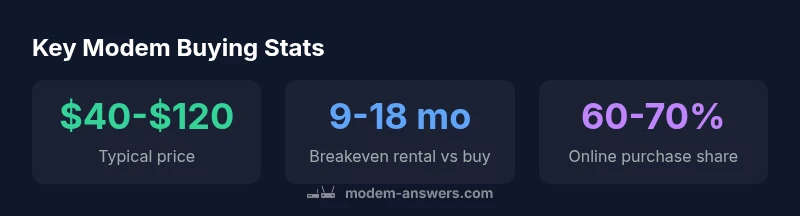
Prices for new modems fall within a broad range depending on features and performance. Common budgets cover basic, entry-level models, mid-range devices, and premium gateways. Look for models that support your plan’s maximum speeds and have a good warranty. Deals often emerge during holiday seasons or when bundled with a router. If you find a rental offer from your provider, compare the long-term cost to buying outright. In many cases, a one-time modem purchase pays off within a year or two, especially if you expect to stay with your current provider for several years. Always verify any rebate or activation offers to determine true savings over time.
Checking compatibility with your provider before purchase
Compatibility is the most critical consideration when deciding where to buy a modem. Before buying, consult your provider’s official list of approved devices. You’ll want a DOCSIS 3.0 or 3.1 modem that supports your plan’s speed tier and the number of channels you’ll actually need. Some providers require a modem to be registered to your account, while others restrict certain models. If you’re unsure, reach out to customer support and request a compatibility confirmation with the exact model number. Keeping track of the MAC address and firmware expectations can prevent activation delays after checkout. If you’re crossing providers, ensure the model is not locked to a specific service.
Buying new vs refurbished or rental: pros and cons
New modems offer the latest features, longer warranties, and the highest reliability, but cost more upfront. Refurbished models can save money but may carry shorter warranties or limited return windows; verify the seller’s refurbishment process and the exact warranty terms. Renting from your provider eliminates upfront costs and simplifies support, but over time you may pay significantly more than buying. A good rule of thumb is to run a break-even analysis based on your monthly rental price and the one-time purchase price from reputable retailers. If you expect to stay with the service for several years, buying is usually the more economical route.
Safe shopping, returns, and warranties
To avoid regrettable purchases, buy only from reputable retailers with clear return policies and robust warranty coverage. Read the warranty terms carefully—look for duration, what’s covered, and whether you must register the product. Save the original packaging and receipts, and document any activation or MAC address details. When shopping online, verify seller ratings and ensure secure checkout. For license or activation constraints, confirm you can self-activate the modem or if a technician visit is required. Modem Answers emphasizes prioritizing providers with transparent return windows and easy-to-access support.
Setup after purchase: quick-start steps
Once you have your modem, start with a basic setup to verify performance. Connect the modem to your coax line, power it on, and check the status lights. If you’re using a separate router, connect it to the modem and configure your Wi‑Fi name and password. Run a speed test from a wired device, then again on Wi‑Fi to assess coverage. If speeds lag, verify that your plan supports what you’re receiving and consider relocating your router or upgrading to a higher-performance model. Keeping firmware up to date helps maintain security and performance.
Modem buying channels comparison
| Channel | Pros | Cons |
|---|---|---|
| Online retailers | Wide selection; price comparison; quick delivery | Risk of scams; ensure seller ratings |
| Carrier/ISP stores | Verified compatibility; easy activation | Higher prices; limited models |
| Manufacturer direct | Latest models; official warranty | Stock delays; returns process |
| Big-box electronics | In-store support; immediate pickup | Inventory variability; price differences |
FAQ
Where is the best place to buy a modem for home internet?
Online retailers, manufacturer sites, and major electronics stores are reliable options. Compare prices, verify compatibility with your provider, and check return policies before purchasing.
Online stores, manufacturer sites, or electronics retailers are good options; make sure the modem is compatible and check the return window.
Should I buy a modem or rent from my provider?
Buying generally saves money over the long term, but renting can be convenient if you dislike handling upgrades. Compare monthly rental costs to the upfront price and expected service duration.
Buying usually saves money long-term; renting is convenient but costs more over time.
Can I buy a used or refurbished modem?
Used or refurbished models can save money, but check compatibility, warranty, and return policies. Ensure the device is not locked to another provider and comes with basic testing.
Used gear can save money, but verify compatibility and warranty terms.
What features matter most when buying a modem?
Key features include DOCSIS version (3.0 vs 3.1), channel bonding, and provider compatibility. If you want built‑in Wi‑Fi, consider a gateway or router combo with strong coverage.
Look for DOCSIS version, channel bonding, and compatibility. Consider built-in Wi‑Fi if you need a combo device.
How can I ensure a modem will work with my provider after purchase?
Check the provider’s approved devices list for the exact model, and verify MAC address advancement if required. If in doubt, contact support before purchase.
Check the provider's approved list and confirm MAC/address support before buying.
Are there warranty considerations for online modem purchases?
Yes. Review warranty length, what’s covered, and how to file a claim. Ensure the seller offers a clear return window and post‑sale support.
Yes—check warranty length and return policy before purchasing.
“Choosing the right modem starts with confirming provider compatibility and long-term costs; buying upfront often beats renting over time.”
Key Takeaways
- Compare channels to find best price and return policies
- Verify provider compatibility before buying
- Buying outright saves money long-term
- Decide between modem vs gateway based on household needs
- Buy from trusted sources with clear warranty terms