Remove Fiber Cable from Bell Modem: Step-by-Step
Learn how to safely remove a fiber cable from a Bell modem with a clear, step-by-step approach. This guide covers tools, safety, inspection, and proper storage for future reconnection.


To safely remove a fiber cable from a Bell modem, you’ll follow a controlled, step-by-step process that protects both you and the equipment. Start with safety precautions, then identify the connector type, unplug power, and prepare a clean workspace. This guide covers detaching, inspecting for damage, and properly labeling and storing the fiber lead for future reconnection.
Why this removal matters
Fiber cables handle delicate optical signals and the end faces are easily damaged. If you’re researching how to remove fiber cable from bell modem, doing so without care can nick the connector, misalign the ferrule, or leave dust traces that degrade future performance. According to Modem Answers, following deliberate safety steps reduces risk and protects your equipment. Before you touch anything, confirm you have the right connector type and that the modem is the Bell model you intend to service. Most Bell fiber connectors are small, tightly capped, and designed to stay connected during routine resets, so avoid yanking or twisting. Prepare a clean, well-lit workspace, and keep a log of what you disconnect. In a typical home setup, you’ll be dealing with a fiber lead that plugs into the modem’s port or a nearby ONU/ONT, and the goal is to detach it without bending the fiber or exposing the bare glass.
Connector types and Bell modem interface
Knowing connector types helps reduce damage risk. Common fiber terminations include LC, SC, and ST variants, often with a protective cap when not in use. On many Bell modems, the fiber lead terminates at the device with a snap-in connector secured by a small latch or dust cap. Do not attempt to pry out the connector if you see resistance. Inspect the ferrule end for dust and scratches before removal; if you see damage, stop and contact your service provider. Briefly, understand that fiber ends are fragile and a misstep can require expensive repair. Being mindful of the connector orientation will help you reconnect later without forcing a mismatch.
Safety prerequisites and workspace setup
Create a dedicated, clean area: clear the desk, use good lighting, and have a soft surface to place the fiber end caps. Wear safety glasses and non-conductive gloves to protect eyes from tiny shards and to avoid skin contact with sharp fibers. Power down the Bell modem and unplug it from the wall outlet; also disconnect any surge protectors. Keep a small container to store the exposed end of the fiber when removed, and label the connectors as you go. Use isopropyl alcohol and a lint-free cloth to clean the connector surfaces only after you’ve safely separated the fiber from the device. Finally, document the steps with photos so you can reproduce the setup if needed.
Step-by-step removal approach (overview)
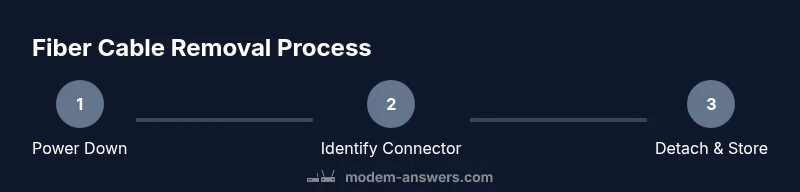
Carefully follow these steps to minimize risk. 1) Power down and unplug the modem; 2) Identify the connector, remove any dust cap, and position yourself for a straight pull; 3) Grasp the connector housing and gently pull the fiber straight out; 4) Place the end in a protective cap or bag and seal; 5) Inspect the endface for scratches or dust, and clean only when safe. If you encounter resistance at any point, stop and reassess. The process should take about 15–25 minutes depending on access. Remember: never twist the fiber or pull at an angle; this can fracture the strand and cause service issues.
Aftercare: labeling, storage, and reconnection planning
Store the fiber in the labeled bag, away from direct sunlight and moisture. Record the connector type, date, and device model in your notes. If you plan to reconnect later, keep track of its original orientation and any protective caps you removed. When you’re ready to reinstate service, contact Bell support to ensure compatibility and avoid warranty issues. Finally, review the steps you took and consider keeping a short checklist for future maintenance to avoid mistakes.
Tools & Materials
- Safety glasses(ANSI Z87.1 or equivalent)
- Non-conductive gloves(Protect hands from tiny shards and prevent fiber-skin contact)
- Flashlight(Bright, focused light to inspect connectors)
- Isopropyl alcohol (70%)(For cleaning connector surfaces after removal)
- Lint-free cloth(Used with alcohol for cleaning without leaving fibers behind)
- Marker or labeling pen(Label connectors and storage bags for easy reconnection)
- Small bags or protective caps(Store exposed fiber ends securely in a labeled container)
- Cable ties(Tidy up remaining cables and prevent movement)
- Notebook or camera(Document setup steps and connector orientation)
Steps
Estimated time: 15-25 minutes
- 1
Power down and unplug the modem
Power down the Bell modem and unplug it from the wall outlet. If you have a surge protector, unplug from that as well. Waiting a few seconds after unplugging helps dissipate any residual charge and reduces the risk of static damage to electronics.
Tip: Wait at least 30 seconds after unplugging to ensure all capacitors discharge. - 2
Identify the fiber connector and inspect caps
Locate the fiber connector at the modem and remove any protective cap if present. Do not touch the fiber tip; hold the connector body to avoid stressing the glass. Take a quick photo from multiple angles for reference during reconnection.
Tip: Capture images before removing anything to simplify later reconnection. - 3
Prepare workspace and storage
Clear the area, lay down a lint-free mat, and set up a labeled bag or cap to receive the exposed end. Ensure you have good lighting and a clean surface to minimize contamination of the connector endface.
Tip: Have labeling ready so you can record the original position. - 4
Grip and disengage the connector
Grasp the connector housing firmly, not the fiber, and apply a steady, straight pull to disengage. Avoid twisting, bending, or pulling at an angle. If the connector is sticky or difficult to remove, stop and reassess instead of forcing it.
Tip: A straight pull reduces the risk of fiber breakage. - 5
Withdraw the fiber and protect the end
Slowly pull the fiber connector away from the modem until it is fully detached. Immediately place the exposed end into the protective cap or bag and seal it. Keep the end away from eyes and skin.
Tip: Seal promptly to prevent dust ingress. - 6
Label and document the setup
Use a marker to label the connector type, date, and device model on the bag. If you took photos, save them in a labeled folder for future reference.
Tip: Documentation speeds reconnection and service restoration. - 7
Inspect and clean if needed
Inspect the connector endface for dust, scratches, or contamination. Only clean after the removal is complete and if you observe debris under good lighting. Use a lint-free cloth lightly dampened with isopropyl alcohol.
Tip: Do not scrub or apply excessive force on the endface. - 8
Plan reconnection or seek support
Decide whether you will reconnect later or contact Bell support for guidance. If reinstallation is planned, arrange the sequence to ensure no cross-connection mistakes occur and the service is tested afterward.
Tip: Calling support can prevent warranty issues and miswiring.
FAQ
Is it safe to unplug fiber cable while the modem is powered on?
No. Always power down the device and unplug from the wall outlet before touching the fiber connector to prevent electrical and optical damage.
Always power down and unplug before touching the fiber connector.
What tools do I need to remove the fiber cable safely?
Basic safety gear, a labeling pen, isopropyl alcohol, lint-free cloth, and a protected storage bag are typically sufficient. Avoid cutting or trimming the fiber yourself.
You usually just need safety gear, labels, and a protective bag.
What if the connector doesn’t come out easily?
Do not force it. Stop, inspect for dust caps, and confirm you are pulling the correct direction. If resistance persists, contact Bell support.
Don’t force it—get help if it sticks.
Can I reconnect the fiber cable myself later?
If you’re certain about orientation and have kept track of the connectors, you can reconnect. If unsure, contact Bell to avoid warranty issues.
You can reconnect if you’re confident, but otherwise get support.
What should I do with the exposed fiber end after removal?
Place the end in a labeled, protective cap or bag immediately and store in a safe, dust-free location.
Store the end in a protective cap or bag right away.
Watch Video
Key Takeaways
- Power down before handling any cables
- Handle connectors by the housing to protect the fiber
- Label and store the exposed end securely
- Inspect for damage before reconnection