Optimum Register Modem: A Complete How-To Guide
Learn how to perform an optimum register modem with clear, step-by-step instructions. This guide covers prerequisites, activation steps, troubleshooting, and best practices to ensure fast, reliable service and secure home networking.


By following this guide, you'll complete an optimum register modem with your ISP, ensuring activation and strong performance. You will need your account details, the modem's MAC address and serial number, access to the activation portal, and a stable connection. The steps cover prerequisites, the activation flow, and common pitfalls to avoid.
What the phrase 'optimum register modem' means and why it matters
In the world of home networks, the phrase "optimum register modem" signals that you are aligning your hardware setup with your ISP's activation workflow for best performance. According to Modem Answers, correct registration helps ensure the modem is recognized by the provider, your service plan is linked to the device, and your Wi‑Fi network is ready for use with minimal downtime. The registration typically involves confirming account details, the device's MAC address, and the service address, then submitting the information through the provider's activation portal or customer support channel. A clean, successful registration reduces activation delays and improves the onboarding experience for streaming, gaming, and smart home devices.
Beyond speed and connectivity, proper registration supports security settings, IP allocation, and firmware updates. By understanding the required fields and the order of operations, you can avoid bottlenecks and ensure your home network is ready for everyday use. This knowledge also helps when you need to troubleshoot activation later without unnecessary stress.
Gather prerequisites and information you should collect before beginning
Before you start the optimum register modem process, assemble all necessary information. You should have your account number, service address, and the model name of the modem. Collect the MAC address and serial number as labeled on the device, and have the administrator credentials for any router you plan to use behind the modem. In many cases, you may need a temporary activation code or a reference number from the portal. Having this data at hand reduces back-and-forth with support and speeds up the activation flow. A quiet, well-lit workspace helps you copy codes accurately and avoids transcription errors.
Prepare the hardware and network for activation
To ensure a smooth optimum register modem experience, physically connect the modem to the provider’s service line and power it up. If you use a separate router, decide whether you will place the router behind the modem (gateway) or in bridge mode to minimize double NAT issues. Ensure cables are secure and not loose, and verify LEDs indicate a stable link before proceeding. A wired connection to the activation portal is preferred for reliability, but a strong Wi‑Fi link can work if a wired path is unavailable. This preparation minimizes interruptions during the activation prompts.
What to expect in the activation flow (high-level overview)
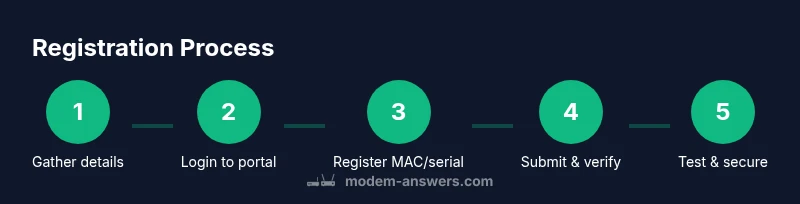
Activation flows vary by provider, but most common steps are consistent. Sign in to the activation portal, verify your service address, register the modem’s MAC address, and confirm service details. Some providers require the device ID or serial number, and others may issue a temporary activation code. After submitting the required data, you should receive confirmation and an activation countdown. Keep screenshots or notes as you go so you can reference them if the portal prompts you to re-submit information.
Troubleshooting common issues during optimum register modem
If activation stalls, double-check physical connections and reboot the modem and router. Ensure you are using the correct account credentials and that the MAC address you registered matches the label on the modem. Some portals require a verification code via SMS or email; if you miss it, retry after a short wait. If provisioning delays occur, contact customer support with your reference numbers and screenshots of any error messages. Patience and precise data entry are your best allies here.
Security, privacy, and best practices during activation
During registration, avoid sharing sensitive credentials through insecure channels. Use official portals and approved support channels, and make sure you are connected to a trusted network when entering account information. Keep firmware up to date, enable strong WPA3 security on Wi‑Fi if available, and disable remote management if you do not need it. These steps reduce exposure while your modem is being provisioned and integrated into your home network.
Verifying activation and initial performance
After activation completes, check the provider’s status indicator, log into the modem's admin interface if available, and run a quick speed test. Confirm that your public IP is assigned and that devices can browse and stream without interruption. Test Wi‑Fi on multiple devices, and if you use a separate router, ensure it is connected correctly and updated. If you notice slow speeds, assess interference from nearby networks and consider channel changes or repositioning the access point for optimal coverage.
Advanced tips from Modem Answers for ongoing health
Keep a small activation diary that records dates, firmware versions, and any changes in performance. Schedule periodic reboots to prevent slowdowns, and monitor signal quality using your modem’s built-in diagnostics. For homes with smart devices, consider segregating IoT traffic with a guest network to preserve bandwidth for primary devices. The Modem Answers team emphasizes continuous learning: review your settings seasonally and adapt to changes in service plans or home equipment.
Final notes and next steps
With the optimum register modem completed, you’re positioned for reliable home internet. Remember to document activation codes, keep firmware current, and maintain strong security practices. If you plan to upgrade hardware or adjust your network topology, revisit the activation steps to ensure continued compatibility with your service. By following these practices, you can maintain a resilient, fast, and secure home network.
Tools & Materials
- Computer or smartphone with internet access(Needed to access the activation portal and view prompts)
- ISP account details (account number, service address)(Have on hand for verification and activation)
- Modem MAC address and serial number(Label on the device; may be found in the device settings)
- Modem model name(Required for device registration and compatibility checks)
- Router admin credentials (if deploying behind modem)(Needed if you plan to use a separate router or bridge mode)
- Stable internet connection during activation(Wired connection is preferred to prevent dropouts)
- Pen and paper or notes app(Record activation IDs and prompts for reference)
Steps
Estimated time: 60-90 minutes
- 1
Gather required information
Collect your account number, service address, modem MAC address, serial number, model name, and any activation codes. Having this data ready prevents delays when you reach the activation portal.
Tip: Create a dedicated activation folder on your device to store numbers and screenshots. - 2
Prepare hardware and network
Connect the modem to the service line and power it on. If using a router behind the modem, decide on bridge vs router mode before activation.
Tip: Use a wired link to the activation portal if possible for reliability. - 3
Log in to the activation portal
Open the provider’s activation page and sign in with your account credentials. Locate the section for registering devices or activating service.
Tip: Bookmark the activation URL and note any reference numbers. - 4
Register hardware identifiers
Enter the MAC address, device serial/ID, and plan details as prompted by the portal. Verify each entry against the labels on the device.
Tip: Double-check the MAC address before submission to avoid mismatches. - 5
Submit and capture activation codes
Submit the required information and save any activation codes or reference numbers provided by the portal.
Tip: Take screenshots of confirmations for future troubleshooting. - 6
Test connectivity and performance
Run a speed test, try loading several websites, and verify multiple devices can browse and stream.
Tip: If speeds are slow, reboot the modem and router (if used) and re-test. - 7
Finalize setup and security checks
Update firmware if prompted, enable security features, and configure Wi‑Fi name and password.
Tip: Document network settings for future changes and ensure guest access if needed.
FAQ
What is optimum register modem and why is it necessary?
An optimum register modem is the process of registering your equipment with your ISP to activate service and ensure compatibility. Proper registration helps with provisioning, security, and performance.
Optimum register modem means registering your equipment so your service activates correctly and performs well.
What information do I need before starting registration?
You’ll typically need your account number, service address, modem MAC address, serial number, model name, and possibly a temporary activation code.
You’ll need your account number, address, and the modem details before you start.
What if activation fails?
Check cables, reboot devices, confirm credentials, and retry. If issues persist, contact support with reference numbers.
If activation fails, recheck connections and credentials, then contact support with reference numbers.
Can I perform registration myself, or do I need a technician?
Many providers offer self-registration via an online portal; technicians are only required for installation in some cases.
Most people can register online; technicians are only needed in some cases.
How can I ensure my network is secure after registration?
Update firmware, enable WPA3 if available, set a strong Wi-Fi password, and disable remote management if unused.
Update firmware and use strong passwords to keep your network secure.
Watch Video
Key Takeaways
- Prepare activation details in advance
- Follow portal steps in order to avoid delays
- Record activation IDs and reference numbers
- Test connectivity across devices after activation