Can You Get a Second Modem From Xfinity? A Step-by-Step Guide
Discover whether you can add a second modem to Xfinity, how compatibility works, potential costs, and a practical setup guide with step-by-step actions.


Yes — you can generally obtain a second modem from Xfinity, but eligibility depends on your plan, location, and device compatibility. Xfinity may require you to rent a supported modem or gateway for the second unit and could charge a separate rental fee. You can also use your own DOCSIS 3.x modem if allowed; verify with Xfinity first.
can you get a second modem from xfinity: eligibility and scope
According to Modem Answers, can you get a second modem from xfinity is a question many households ask as they look to expand coverage beyond a single gateway. The short answer is yes in most cases, but there are rules about eligibility, device compatibility, and installation methods. This article walks you through how to determine if a second modem is right for your home, what to expect in terms of costs, and exactly how to set it up without disrupting your existing service.
First, clarify your plan with Xfinity: some plans include a second modem option or gateway, while others rely on a single device. If you’re renting from Xfinity, adding a second device may involve additional rental fees; if you own a modem, you’ll still need to get it approved on the account. By knowing your plan’s terms, you’ll avoid surprises at activation.
Understanding your plan and device eligibility
Your Xfinity plan and service address influence whether you can add a second modem. The same policy may differ by region and by whether you’re renting from Xfinity or using your own equipment. In general, you’ll want to confirm: 1) Are you allowed to connect more than one modem or gateway to your account? 2) Is the second device on the approved device list? 3) Are there any conditions related to your internet tier? Having clear answers will prevent last-minute activation problems. This step also helps you assess whether you should request a second modem from Xfinity or invest in a separate router setup.
How Xfinity handles modems and gateways
Xfinity’s ecosystem centers on DOCSIS modems paired with gateways or standalone routers. The company typically maintains a list of approved devices and enforces account-based licensing controls for additional hardware. Modem ownership vs. rental status can impact activation timelines and support coverage. Based on Modem Answers analysis, the process often involves device registration on the account, compatibility checks, and possibly a brief activation window. Understanding these pieces helps you plan a smoother deployment and avoid service interruptions.
Why you might want a second modem at home
A second modem can support a more robust home network by separating network traffic, reducing contention during peak hours, and enabling a dedicated path for smart home devices or gaming consoles. It also provides a pathway to create a separate guest network or a dedicated IoT subnet without impacting the primary household network. For some households, a second modem acts as a stepping stone toward bridging or segmenting services while keeping the existing gateway in service for essential devices.
Renting vs owning a second modem: costs and terms
There is a practical trade-off between renting a second modem from Xfinity and using a personally owned device. Renting often includes device support from the carrier, but it comes with ongoing monthly charges and potential policy changes. Owning a modem can reduce monthly costs over time, but it requires upfront investment and ensuring ongoing compatibility with Xfinity’s network. Always verify activation fees, installation charges, and any required service terms before committing to a second device on your account.
How to choose a compatible second modem
Start with Xfinity’s approved device list and ensure the modem is DOCSIS 3.0 or 3.1 compatible with your plan. Verify that you can register the device to your account and that the spectrum of supported features aligns with your needs (e.g., channel bonding, upstream/downstream speeds). Consider factors such as signal quality, physical size, and heat management for devices placed near entertainment centers or network hubs. If you’re unsure, contact support to confirm compatibility before purchasing.
Practical deployment considerations
Place your second modem in a central location with easy access to coax outlets and adequate ventilation. If your goal is to create distinct networks, you may connect the second modem to a separate router or a managed switch, ensuring you don’t accidentally create double NAT configurations that complicate port forwarding or gaming. Maintain clear labeling of cables and keep power supplies organized to simplify future maintenance.
Common pitfalls and troubleshooting when adding a second modem
Be aware of double NAT scenarios when using two routers in one network. Check that each device is on the approved list and registered to your account; misregistered hardware can trigger activation errors. If speeds drop after adding the second modem, re-check coax connections, signal levels, and any splitter configurations. When in doubt, reboot devices in the right order and re-run activation checks through the Xfinity app.
Next steps and Modem Answers’ verdict
If you’re considering a second modem, confirm eligibility with your account, gather the necessary hardware, and plan a clean deployment path. The Modem Answers team recommends documenting your plan, testing performance before and after, and maintaining a simple network map for future changes. With careful preparation, a second modem can improve coverage and reliability without introducing new headaches.
Tools & Materials
- Second compatible modem(Must be on Xfinity's approved devices list and compatible with your plan (DOCSIS 3.0/3.1).)
- Coaxial cable(Appropriate length to reach the new device from the nearest coax outlet.)
- Xfinity account login(Needed to register the second modem to your account.)
- Ethernet cable (optional)(Useful if you plan to connect a separate router or access point.)
- Coaxial splitter or MoCA adapter (optional)(Optional if you need to share signal to multiple devices or networks.)
- Power strip or extra outlet(Ensure a safe power source near the new modem.)
Steps
Estimated time: 30-60 minutes
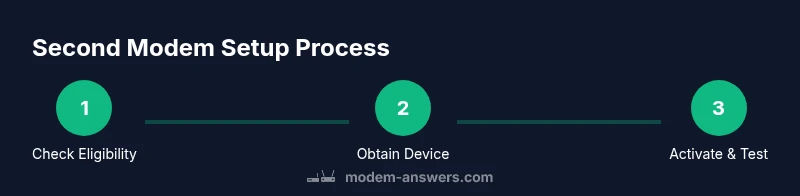
- 1
Confirm eligibility and plan
Check your Xfinity account or contact support to confirm that a second modem is allowed on your current plan and address. This step avoids activation delays and unexpected charges.
Tip: Document the plan terms in writing if possible; this helps escalate any issues later. - 2
Gather required hardware
Collect the second modem, coaxial cable, and any optional accessories. Ensure the device is on Xfinity’s approved list and that you have account access for activation.
Tip: Double-check the modem model against Xfinity’s compatibility list before purchase. - 3
Connect the coax and power
Connect the coax from the wall to the modem’s RF in, then plug in the power. Avoid power surges by using a clean outlet. This establishes the hardware link before activation.
Tip: Keep cable connections tight; loose connectors can cause signal loss. - 4
Register the device on your account
Open the Xfinity app or website and add the new device to your account. Follow the on-screen prompts to complete the activation process.
Tip: If activation fails, try rebooting the modem and reattempting the registration. - 5
Test and configure your networks
Test internet connectivity on the new device and configure any needed network settings (e.g., separate SSID for a guest network or IoT subnet).
Tip: Run a speed test and verify that devices using the second modem see improved performance.
FAQ
Can I use two modems with an Xfinity gateway?
In many cases you can, but it depends on your plan and device compatibility. The gateway may still be used for some services while the second modem handles additional devices. Always verify with Xfinity support.
Yes, you can often use two devices, but check your plan and device compatibility first.
Do I need a separate account for a second modem?
Typically you register the second modem to your existing Xfinity account. You may be asked to authorize the new device within the account management tools.
Usually no separate account is needed; register the device in your current account.
Will adding a second modem improve Wi-Fi performance?
A second modem can improve performance by reducing shared traffic on a single device, especially when you pair it with a dedicated router. Real gains depend on your home layout and service plan.
It can help, but results vary by home setup and plan.
Are there extra fees for a second modem?
There can be rental charges for a second modem or gateway, depending on your plan and whether you use a rental device or own your own.
There may be a rental fee; verify terms with Xfinity.
What if my second modem isn’t on the approved list?
An unlisted modem may not activate or be supported by Xfinity. Using an approved device reduces risk of outages and troubleshooting hassles.
Use only approved devices to avoid issues.
Can I bridge two modems to create separate networks?
Bridge mode is typically used to connect multiple routers, not two standalone modems. If you need two networks, consider a dedicated router setup rather than multiple modems.
Bridge mode with two routers is common; for modems, use a router instead.
Watch Video
Key Takeaways
- Confirm eligibility before purchasing a second modem
- Use Xfinity-approved devices to avoid activation delays
- Decide between renting and owning based on long-term costs
- Plan network topology to avoid double NAT issues
- Test performance after setup to verify benefits