Modem vs Router Spectrum: A Thorough, Objective Comparison
A practical, objective guide to modem vs router spectrum: understand roles, features, costs, and setup tips for reliable, secure home networks for homeowners and renters.


The Core Roles: Modem vs Router in Plain Language
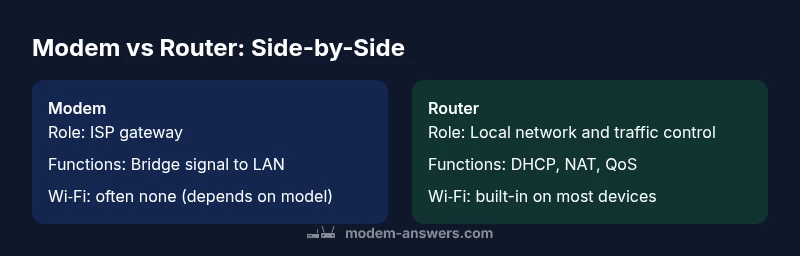
To understand modem vs router spectrum, start with the basics: the modem is the gateway to the internet; the router is the traffic director inside your home. In practical terms, your modem translates signals from your ISP into an internet connection for your home network; your router takes that connection and creates a local network, assigns IP addresses, and manages data flow between devices.
This distinction matters for performance, security, and upgrade paths. A mismatch—such as using a router that expects a different WAN type or a modem that lacks bridge capability—can lead to double NAT, reduced speeds, or limited features. According to Modem Answers, many households end up paying for rental equipment they don’t need because they confuse roles or buy the wrong device for their ISP. By clarifying these roles, you can design a network that scales with your needs and avoids unnecessary complexity.
In this article, we’ll explain the spectrum of needs—from basic browsing to gaming and smart homes—and show how to decide between separate devices and integrated gateway solutions. The goal is a resilient, simple-to-manage network that delivers reliable Wi‑Fi, robust security, and predictable performance for homeowners and renters alike.