Hide Modem and Router in Living Room: A Practical Guide
Learn practical, step-by-step methods to conceal a modem and router in your living room without sacrificing signal or safety. This guide covers furniture approaches, cable management, ventilation, and budget-friendly tricks for homeowners and renters in 2026.


You’ll learn practical, safe ways to hide a modem and router in your living room while keeping strong Wi‑Fi. The guide covers furniture placement, cable routing, ventilation, and stylish concealment options that work for both homeowners and renters in 2026. You'll learn practical checks for heat, accessibility, and serviceability, plus budget-friendly ideas.
Why hide modem and router in the living room
In many homes, the modem and router serve every room. But visible boxes, cables, and power bricks can clash with a room’s design. The keyword how to hide modem and router in living room appears across rooms, yet the goal remains the same: keep devices accessible for maintenance while blending them into the decor. According to Modem Answers, many households pursue discreet solutions without compromising connectivity or safety. The balance is to conceal cables and hubs while ensuring there is enough airflow and easy access for resets or swaps. Start by defining your constraints: where you want to access power, where cables must run, and which storage options won’t heat or trap dust. A thoughtful plan helps you achieve a clean look without creating new problems for heat or dead zones. The Modem Answers team emphasizes that aesthetics should never trump ventilation or repair access, and that a well-planned concealment can improve both form and function in your living space.
Assess your space: measuring, outlets, and signals
Before choosing concealment options, measure the available surfaces, outlets, and sight lines. Map the longest cable runs from the modem to the router and consider behind-sofa or TV-stand placements. Check whether outlets are positioned for easy power access without visible cords and whether you’ll need surge protection or a power strip with a tight cord. The placement should minimize signal obstruction by walls, furniture, and decorative items. Perform a quick signal check in the room using your phone or a Wi‑Fi analyzer app to establish a baseline. Modem Answers analysis shows that proximity to walls and metal furniture can influence signal strength; plan your layout to keep the primary devices within one to two walls of the main seating area. End by sketching a rough layout to guide any concealment work.
Design approaches: built-in furniture, credenzas, and concealed shelves
Built-in or modular furniture provides the strongest concealment while preserving access. Consider credenzas with closed backs, modular media consoles with ventilation slots, or a cabinet with a perforated front that hides the hardware yet breathes. If you’re renting, you can retrofit with freestanding units that fit the space and color scheme. Use a cable management system that routes behind the furniture and into a dedicated cable channel. Paint or veneer the enclosure to match wall color or furniture tones, so devices disappear rather than stand out. The aim is to create a cohesive look where the router and modem sit behind doors or panels that look intentional rather than like a tacked-on gadget rack.
Decorative concealment: screens, baskets, and fabric panels
Decorative screens, fabric panels, or woven baskets can disguise tech without blocking airflow. Choose options with breathable materials and avoid dense, solid barriers that trap heat. If you use baskets, place the devices on the bottom shelf with space above for airflow and consider a lift-out panel for easy access. For screens, select designs that complement your room’s style—mid-century wood, modern metal, or soft textiles can all work. Attach small, label-friendly hooks or magnets to remind you of ports or resets. The key is to maintain an open path for air and to keep patch cords tidy and labeled for quick reconfiguration if your service provider changes equipment.
Cable management techniques: routing, clips, and safety
A clean concealment relies on robust cable management. Use low-profile raceways or adhesive cable clips along the back edge of furniture or walls to keep cords neat and out of sight. Bundle cables with reusable Velcro wraps and label each one for easy maintenance. Route power and data separately where possible to reduce interference; never bundle high-power cords with network cables. If you hide a power strip behind a panel, ensure it has adequate clearance and is easily accessible for resets. Avoid crushing cables behind tight corners; give them gentle curves to prevent pinching and wear. If the root cause of clutter is too many devices, consider consolidating with a single modem-router combo when it suits your service.
Ventilation and heat management: keep devices cool
Modems and routers generate heat, especially when handling high data loads. Choose concealment options with airflow in mind: perforated fronts, slatted doors, or back panels with mesh. Do not seal devices inside solid boxes or airtight cabinets. Place devices away from direct sunlight and heat sources like radiators. If you’re enclosing within furniture, add small fans or passive vents at the top or sides to promote convection. Clear the space around vents to prevent obstructed airflow, and avoid placing metal boxes directly against other metal surfaces that can reflect heat. Regularly check for warmth after long streaming sessions to ensure the enclosure isn’t trapping heat.
Signal performance and placement considerations: keep coverage strong
Hidden placements should not compromise Wi‑Fi coverage. Position the primary router where it can reach the main living area with minimal obstructions, then consider a mesh satellite if you notice dead zones. If you must place devices behind a cabinet, choose one with perforated doors or a rear vent to reduce signal loss. Orientation matters: steer antennas (if present) toward living spaces rather than into a wall. Test coverage after concealing and adjust if you detect slow speeds or buffering. Small changes, like moving a router 6–12 inches can sometimes boost signal more than larger cosmetic adjustments. Maintain a center-of-room strategy for the router housing to minimize distance to wall partitions.
Weekend-friendly concealment projects: a practical plan you can start now
If you want a fast, low-effort approach, begin with a shallow storage ottoman or a slim credenza behind the sofa. The goal is to create a hidden nook with proper ventilation while preserving access for maintenance. Use cable raceways along the wall to tuck cords cleanly, then cover them with a decorative panel or fabric that matches your room. For renters, opt for freestanding solutions you can remove if you move. Schedule a two-hour window and assemble any modular pieces ahead of time. By the end of the session, you’ll have a hidden but accessible network core that reduces visible clutter without compromising connectivity.
Maintenance and troubleshooting after concealment: keep things running smoothly
Periodically inspect the concealment for dust buildup and loose connections. Run a quick speed test in the main living area to verify that the hidden setup still delivers adequate performance. If you notice slowdowns, consider repositioning the router or adding a mesh satellite. Check vents for obstructions and clean them with a soft brush. If a port stops working, locate a spare cable and reseat the connection to confirm it isn’t a simple plug issue. Keep a small toolkit nearby for quick repairs. The goal is to preserve reliability as your home network evolves with new devices or internet plans.
Accessibility and future upgrades: plan for the long term
As your family grows or service plans change, your concealment should adapt. Leave accessible panels or doors on the enclosure and label ports for future upgrades. Use modular furniture that can be reconfigured without removing the entire setup. Periodically reassess cable routes to avoid wear, and stay mindful of ventilation needs as equipment ages. The aim is to maintain a clean, integrated look while preserving the ability to service and upgrade network gear as your home network evolves.
Tools & Materials
- Cable raceways or cord channels(Paintable to match walls; multiple lengths for long runs)
- Adhesive cable clips(Assorted sizes; for securing cords along edges)
- Decorative baskets or storage boxes(Breathable materials; avoid sealed containers)
- Perforated panels or screens(Optional to create visual separation)
- Ventilated cabinet or credenza(Use with back vents or mesh fronts)
- Surge-protected power strip(UL-listed; avoid daisy-chaining)
- Cable labels/tags(Identify power vs data lines)
- Mesh Wi‑Fi extender or satellite(Optional for improving coverage if needed)
Steps
Estimated time: 90-120 minutes
- 1
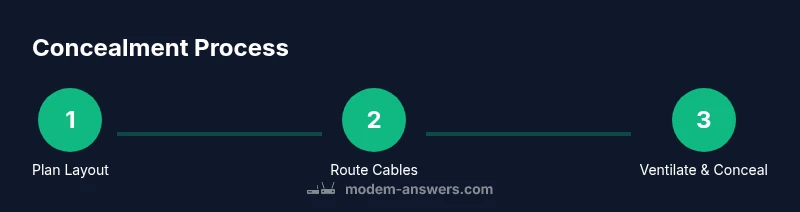
Plan concealment layout
Survey the living room and decide which surfaces will host concealment without blocking vents or outlets. Draw a simple plan that marks power access, data cables, and seating. Determine if a single enclosure or multiple smaller pieces best fit the space.
Tip: Do a quick measurement audit and note any fragile walls or wiring you must avoid. - 2
Gather materials and tools
Collect raceways, clips, labels, a surge protector, and any furniture with ventilation. Having everything on hand prevents mid-project trips to the store and keeps the project moving.
Tip: Check product dimensions before purchasing to ensure a clean fit with your chosen furniture. - 3
Install raceways and route cords
Attach channels along the back of furniture or along the wall to hide power and data cables. Use clips to secure cables at cable-friendly angles so they don’t snag or pull. Keep data cables away from power lines to minimize interference.
Tip: Use dry-wall safe adhesive if you’re not drilling; avoid metal studs that complicate routing. - 4
Position devices for ventilation
Place the modem and router in a location with at least several inches of clearance on all sides. Avoid enclosed spaces without vents. If you must hide behind a panel, choose one with a mesh or perforated front.
Tip: Leave a visible air gap around the devices; blocked vents are a common cause of overheating. - 5
Conceal with decorative panels
Cover the storage with a panel or fabric that matches your decor. Ensure access doors open easily for resets or reconfigurations. Label ports inside the panel space to speed future maintenance.
Tip: Use soft-close hinges or magnets so doors don’t slam when you access devices. - 6
Test network coverage
Run speed and latency checks in living areas to confirm the concealment doesn’t degrade performance. Move a satellite or extenders if needed and re-test from multiple seats.
Tip: A small Wi‑Fi heat map can reveal dead zones you didn’t expect. - 7
Safety and accessibility check
Make sure cords are not pinched, outlets accessible, and a quick access path exists for power cycling or resetting equipment. Keep liquids away from electronics and avoid placing plugs where furniture might trap them.
Tip: Never block a power outlet with heavy furniture; always leave enough slack for unplugging. - 8
Document and label
Create a simple diagram of where each cable runs and what device connects where. Label ports and io on the back of devices or on the enclosure to simplify future upgrades.
Tip: Photograph the setup for future reference when you relocate or reconfigure.
FAQ
Is it safe to hide a router behind furniture?
Yes, as long as you avoid blocking vents and give the device enough space for heat dissipation. Keep access for resets and maintenance.
Yes. Just don’t block the vents and make sure you can access it easily if you need to reset it.
Will hiding the modem affect Wi-Fi signal?
Hiding can affect signal if the enclosure blocks vents or line-of-sight. Place the router in a central, open location and test coverage; add a mesh satellite if needed.
It can, so test coverage and consider a mesh extender if there are dead spots.
How can I hide cables safely without compromising safety?
Use cable raceways, clips, and labels. Keep power and data cables separate when possible and ensure cords remain accessible for unplugging.
Hide cables with raceways and clips, and keep power cords accessible.
What materials work best for concealment without overheating?
Breathable materials such as perforated panels, woven baskets, or mesh-front cabinets work well. Avoid solid metal boxes that trap heat.
Breathable panels or mesh-front cabinets work well; avoid solid metal boxes.
Will rental rules restrict concealment projects?
Most rental agreements allow furniture and cosmetic changes as long as outlets remain accessible and there’s no permanent damage. Check with your landlord if needed.
Yes, as long as you preserve access and avoid damaging walls.
How do I know if concealment affects service changes?
If your internet plan changes, you may need to re-route cables or adjust placements. Keep a flexible setup that can adapt to new equipment.
Be ready to reconfigure if you upgrade equipment.
Watch Video
Key Takeaways
- Plan layout before buying concealment furniture.
- Ventilation is non-negotiable for electronics.
- Cable management reduces visible clutter and preserves accessibility.
- Test Wi-Fi after concealment and adjust if needed.