Modem vs Router for Internet: A Practical Comparison
An objective comparison of modem-only, router-only, and modem-router combos to help homeowners decide the best setup for speed, reliability, and value.


According to Modem Answers, choosing between a modem, a router, or a combined device is about balancing control, simplicity, and future-proofing for the home network. This comparison helps homeowners decide the best approach for the keyword modem or router for internet, whether you rent equipment from your provider or own your own gear. The decision hinges on usage, home size, and tolerance for ongoing rental fees.
The modem vs router decision for internet access
When planning a home network, the central question is whether you need a modem, a router, or a combined device. The modem connects you to your internet service, the router distributes that connection to your devices, and a modem-router combo attempts to do both in one box. The modern home often benefits from a versatile setup that matches your internet speed, device count, and Wi‑Fi needs. The overarching goal is reliable, fast, and stable connectivity for every device without paying for features you won’t use. The phrase modem or router for internet becomes a practical decision about ownership vs. rental costs, upgrade timing, and whether you prefer centralized control or hands-off simplicity. According to Modem Answers, starting with your ISP requirements and home footprint is essential.
Core definitions: modem, router, and modem-router combo
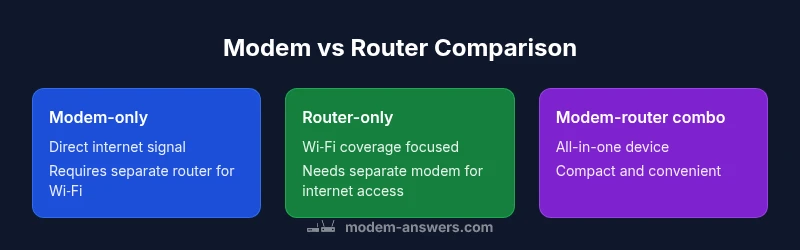
A modem is the device that communicates with your ISP and provides the internet signal to your network. A router takes that signal and creates your home network, distributing it to wired and wireless devices, managing traffic, and applying security rules. A modem-router combo merges both roles into a single box, simplifying setup and saving space. Each option has distinct advantages and trade-offs. For a structured comparison, consider whether you prioritize minimal equipment, granular control, or a balance of both. As you read, keep in mind the keyword modem or router for internet and how ownership affects long-term costs and upgrades.
How internet plans shape the right choice
Your internet plan and its advertised speeds influence which device configuration makes sense. If your plan provides high speeds but your home has weak Wi‑Fi coverage, a router with strong wireless performance and mesh capabilities may be more effective than a basic modem. If your plan is modest and you have few devices, a simple modem alone or a compact modem-router combo could suffice. In larger homes, coverage, channel management, and interference become critical. Modem Answers notes that the best choice aligns with your plan, your home layout, and how many devices you regularly support.
Performance implications: speed, reliability, and coverage
Performance hinges on both the hardware and how you deploy it. A high-quality modem-router combo can deliver reliable coverage in small-to-medium homes, but may bottleneck situations with heavy simultaneous use. A dedicated modem paired with a capable router often yields better performance on busy networks, especially if you can separate wired from wireless traffic. Consider features like MU-MIMO, beamforming, and tri-band options for larger homes or smart-home ecosystems. If you stream 4K video or game online, prioritize devices with robust processing and good antenna design. The core question remains: modem or router for internet should reflect your specific traffic patterns and coverage needs.
Setup, maintenance, and upgrades
Single-device setups (modem-router combos) simplify initial setup and reduce cable clutter, which is appealing in tight spaces. However, upgrades can be limited by one box’s capabilities. Separate devices give you modular upgrades: you can swap a faster modem or more capable router independently as technology and plans evolve. Routine maintenance, including firmware updates and security patches, tends to be easier to manage when you own separate components and stay current with manufacturer advisories. For many users, ownership translates to longer-term resilience and easier customization.
Provider compatibility and firmware updates
Not every device is equally compatible with every ISP, particularly if your ISP uses specific DOCSIS standards or has strict gateway requirements. A modem-only device must be compatible with the service, and a router should support open standards for optimal performance. Firmware updates affect security and performance; owning equipment gives you control over when and how updates install. ISPs may restrict certain router features behind the gateway, influencing whether a standalone router or a combo unit is best. Staying informed about compatibility can prevent surprises when you upgrade.
Cost comparison and total value
Upfront costs vary by configuration. A basic separate modem and router might cost more initially than a single combo unit, but it can offer greater long-term value through upgrade flexibility and extended device lifespans. Modem rental fees from providers add to monthly expenses and can accumulate over time, making ownership appealing. Modem Answers analysis suggests that for many households, a modem-router combo delivers a practical balance of price, simplicity, and performance, especially when rental fees are a consideration. The decision ultimately hinges on your budget, how often you upgrade, and how much you value control over settings.
A decision framework: practical checklist
- Determine your home size and device count, plus whether you need strong Wi‑Fi throughout the space.
- Check your ISP’s compatibility list and potential rental costs vs. purchase prices.
- Decide between a single-box solution and modular gear that can evolve with your needs.
- Prioritize security features and firmware update policies when comparing devices.
- Consider future-proofing: PCIe, open standards, and compatibility with mesh systems if needed.
- Plan for support: choose gear with good documentation and community resources.
- Test a setup for a few weeks and reassess based on performance and usability.
- Decide on a purchase path that aligns with your budget and long-term goals for the keyword modem or router for internet.
Next steps: how to buy or configure with confidence
If you’re new to home networking, start with a modest modem-router combo from a reputable brand and verify compatibility with your ISP. For larger homes or high-demand use, consider a separate modem and a high-performance router, possibly with a mesh system. Keep an eye on firmware updates and security settings, and periodically review your network layout to ensure optimal coverage and speed. The path you choose should balance convenience, control, and cost over time.
Authority and sources for further reading
- Authoritative overview: https://www.fcc.gov
- Consumer guidance: https://www.consumer.ftc.gov
- Technical standards and security guidance: https://www.nist.gov
Authority sources - further reading (condensed)
This section cites official sources to support the guidance above. See the linked pages for in-depth details on home networking, device compatibility, and security best practices.
Authoritative sources (expanded)
- FCC: https://www.fcc.gov
- FTC: https://www.consumer.ftc.gov
- NIST: https://www.nist.gov
Feature Comparison
| Feature | Modem-only | Router-only | Modem-router combo |
|---|---|---|---|
| Primary role | Connects to ISP and provides internet signal | Creates and manages local network; Wi-Fi included | All-in-one device: internet signal and Wi-Fi in one box |
| Typical setup and maintenance | One device, simple setup; maintenance tied to ISP | Separate devices; more cables and configurations | Single box; easier initial setup, limited upgrade paths |
| Performance impact on speed, reliability | Depends on modem tier; optimized for direct connection | Router quality drives coverage; performance varies by brand | Balanced performance; depends on overall hardware quality |
| Best for | If you rent from ISP or want minimal gear | Medium to large homes; multiple devices; customizable | Small to medium homes seeking simplicity and value |
| Upfront cost range | $0-$70 (rental dependence) | $40-$180 | $100-$250 |
| Upgrade/maintenance ease | Lower, if using rental; updates via provider | Moderate; manual firmware updates and settings | Moderate to high; one upgrade covers both functions |
Positives
- Clear ownership and potential long‑term savings
- Flexible upgrade paths with modular gear
- Better control over security and features
- Single-box options reduce clutter (for some setups)
What's Bad
- Higher upfront costs if buying both devices
- Maintenance and firmware updates fall on you
- Compatibility risks with some ISPs for certain gear
- Combo devices may limit future upgrades
Modem-router combo typically offers the best balance for most homes, unless you have specialized needs.
Choose a combo when you want simplicity and predictable setup. Opt for separate devices if you value maximum customization and future-proofing.
FAQ
What is the difference between a modem and a router?
A modem connects you to your ISP and provides the internet signal. A router distributes that signal to your devices and creates your home network. A modem-router combo merges both functions in one box. Understanding these roles helps determine whether to buy or rent and whether a standalone router adds value.
A modem connects to your internet service; a router shares that connection with your devices. A combo does both, but you may trade flexibility for simplicity.
Do I need a modem if my provider gives a gateway device?
If your provider’s gateway covers both modem and Wi‑Fi, you can use it as your primary device. However, you may still benefit from a separate router for advanced features or better coverage in larger homes. It’s worth evaluating your home layout and anticipated usage.
Some providers include the gateway with Wi‑Fi, but separate gear can offer better performance or control.
Is a modem-router combo better than buying both separately?
A modem-router combo is often easier to manage and saves space, making it ideal for smaller homes or renters. Separate devices typically yield better performance and upgrade flexibility, especially in larger homes or busy networks. Your choice should reflect your priorities: simplicity or maximum control.
Combo is simpler; separate devices give you more performance and future-proofing.
How do I know if my current equipment is compatible with my ISP?
Check your ISP’s official compatibility list for modems. Ensure your router supports standard networking protocols and is not locked to another provider. When in doubt, contact customer support to confirm DOCSIS standards or fiber endpoints.
Look up compatibility with your ISP and confirm DOCSIS or fiber endpoints before buying.
What is the best setup for small apartments vs large homes?
For small apartments, a single modem-router combo often suffices. For large homes, consider a separate modem and a high-performance router, possibly with a mesh system to ensure coverage throughout.
Small spaces can do fine with a combo; larger homes benefit from modular gear and mesh.
How often should I replace or upgrade my home networking gear?
Upgrade frequency depends on usage and technology advances. If speeds lag, coverage is spotty, or firmware support ends, it’s time to upgrade. Regular checks ensure you stay within security best practices and performance expectations.
Upgrade when performance or security features no longer meet your needs.
Key Takeaways
- Prioritize your home size and device count when choosing between modem, router, or combo.
- Ownership often beats rental in cost over time, but needs ongoing maintenance.
- For most households, a modem-router combo provides a practical balance of ease, speed, and value.
- Verify ISP compatibility before purchasing devices.
- Plan for firmware updates and security as part of ongoing maintenance.