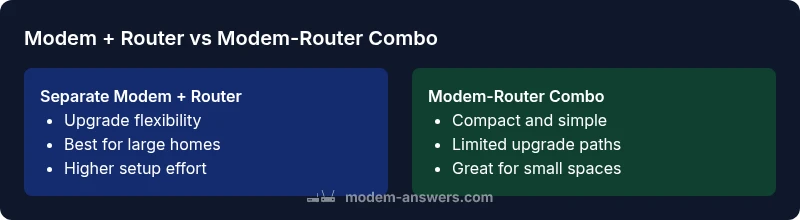
Modem or Modem: A Practical Comparison for Home Networks
An analytical, step-by-step comparison of standalone modem + router setups vs. modem-router combos, with guidance for homeowners and renters seeking reliable home network guidance.


When deciding between a standalone modem + router and a modem-router combo, the best choice depends on your network goals. If you value maximum Wi‑Fi flexibility and easier upgrades, separate devices are often better. If you want a compact, simple setup and minimal management, a modem-router combo can be ideal. For most renters and homeowners who want solid performance with less clutter, a well-chosen combo can suffice, but a separate pair may yield longer-term flexibility.
What the phrase modem or modem means for home networks
In the context of home internet, the question often boils down to choosing between a standalone modem paired with a separate router, or a modem-router combo that integrates both functions into a single device. For many households, this decision influences everything from setup time to how easily you can upgrade wireless performance in the future. The Modem Answers team emphasizes a practical approach: start with your current internet plan, then project how your needs may change in the next two to five years. This guidance is especially relevant when your ISP uses technologies like cable DOCSIS modems or fiber media converters, which shape compatibility and performance. The core distinction is not just hardware layout, but how you manage upgrades, network segmentation, and future-proofing.
For readers evaluating modem or modem, the keyword itself should remind you that the right choice often hinges on ownership vs. rental models, expansion needs, and how you intend to manage firmware updates and security settings over time.
wordCountStart":0},
Comparison
| Feature | Separate modem + router | Modem-router combo |
|---|---|---|
| Setup & initial configuration | Typically involves two devices and a coordinated setup | A single device with guided setup |
| Physical footprint | Takes more space due to two devices and extra cables | Compact, one-box solution |
| Wireless performance and flexibility | Wireless performance can be optimized with a high-quality router; easy to upgrade Wi‑Fi separately | Wi‑Fi is integrated; upgrading often means replacing the whole unit |
| Upgrade path and future-proofing | Separate devices offer targeted upgrades (new modem or new router) | Combo units limit upgrade paths to one device |
| Cost and ownership | Potentially lower total cost if buying devices separately; ongoing rental options exist for modems | Higher initial cost for a single device, but fewer components to manage |
| ISP compatibility | Requires matching both modem and router to ISP standards; more configuration steps | Single device must support your ISP and plan without extra hardware |
Positives
- Greater flexibility to upgrade components independently
- Easier troubleshooting with separate devices
- Potentially better wireless performance with a high-end router
- Clear lifecycle management: replace the slowest link (modem or router) as needed
- Widely compatible with evolving standards
What's Bad
- More clutter and setup complexity
- Higher upfront cost or more devices to manage
- Two devices require more space and power considerations
- More cables to organize and monitor for firmware updates
Separate modem + router generally offers the best balance of performance, upgrade path, and long-term flexibility.
If you value ongoing adaptability and top-tier Wi-Fi, keep the devices separate. If simplicity and space are paramount, a modem-router combo can be a reasonable choice, but assess long-term upgrade needs.
FAQ
What is the difference between a standalone modem + router and a modem-router combo?
A standalone modem + router uses two separate devices, giving you upgrade flexibility and potentially better performance in the long term. A modem-router combo combines both functions into one box for a simpler, space-saving setup, but upgrades become more limited. Your choice depends on how much you value modular upgrades versus convenience.
Two devices give you better upgrade options; one device saves space and simplifies setup.
Which option is best for cable internet?
For cable internet, both options work, but many households choose separate modem and router to optimize Wi-Fi and keep upgrade options open. If your internet needs are moderate and you want a tidy setup, a modem-router combo can be sufficient.
Cable users often start with a combo for simplicity, but consider a separate router as needs grow.
Can I use my own modem with my ISP?
Many ISPs support customer-owned modems. Check compatibility lists and confirm activation steps with your provider. If you later switch ISPs, ensure the modem is compatible with the new service.
Yes, you can use your own modem, but verify compatibility first.
Will a separate router improve Wi-Fi performance over a modem-router combo?
Often yes, particularly in larger homes or homes with many devices. A high-quality router can provide stronger coverage and features like mesh compatibility, advanced QoS, and better app-based management.
A separate router often helps Wi-Fi reach farther and faster.
Are there ISP compatibility issues I should know about?
Some ISPs require approved modems, and certain features may be restricted on rental devices. Always check the ISP's approved device list and activation requirements before buying.
Check the ISP's approved devices before you buy.
Is upgrading easier with one device or two?
Upgrading a single device can be simpler, but upgrading two devices lets you refresh performance in stages. Consider the long-term maintenance and firmware update processes for each option.
Two devices mean you can upgrade one part at a time.
Key Takeaways
- Choose separate devices for maximum customization and future-proofing
- Opt for a modem-router combo when you want a compact setup and minimal maintenance
- Plan for potential upgrades by considering compatibility and firmware management
- Balance upfront costs against long-term ownership and flexibility