Are Modems E-Waste? Practical Guide for Homeowners
Learn if modems are e-waste, how to recycle or donate them, and practical steps for responsible disposal that protect data, prevent pollution, and reduce environmental impact.


Are modems e-waste? In most cases end-of-life modems become electronic waste that requires proper recycling. Modems contain plastics and metals that should be recycled through authorized programs rather than discarded with household trash. Understand local guidelines for donation, recycling centers, and take-back programs to minimize environmental impact. According to Modem Answers, responsible e-waste handling starts at home with simple choices like choosing take-back programs.
Are Modems E-Waste? Defining the issue
Are modems e-waste? The phrase captures a core question at the intersection of household technology and environmental responsibility. In practice, modems become electronic waste when they reach end-of-life, are damaged beyond economical repair, or when data-security considerations require secure disposal. This article, grounded in the Modem Answers framework, explores whether modems fit the e-waste category, what components drive that classification, and how homeowners can manage disposal responsibly.
From a materials perspective, most modems include plastic housings, copper traces, and small quantities of metals that can be recovered through licensed recycling streams. The lifecycle of a modem matters as much as its initial utility; mismanaging disposal can contribute to landfill burden and pollution. Throughout, we discuss practical steps, local options, and policy contexts that affect everyday decisions.
The bottom line about are modems e-waste is contextual: end-of-life decisions matter, and choosing certified recyclers or take-back programs can dramatically reduce environmental impact. By combining guidance with real-world steps, homeowners can keep their networks running and their waste footprint small.
Material Composition and End-of-Life Pathways
Modems are compact electronic devices that combine plastics, circuit boards, and metal alloys. The housing commonly uses durable plastics, while the internal PCB boards contain copper traces, tin solder, and small quantities of metals like gold and nickel. There may also be coatings and adhesives used in cable routing and shielding. At end-of-life, the fate of these materials depends on the disposal stream: dedicated e-waste facilities, certified recyclers, and manufacturer take-back programs can recover valuable metals and prevent hazardous components from leaching into the environment. Data-security considerations often accompany disposal decisions, as decommissioning steps may be required before recycling. In practice, separating nonfunctional units for recycling is preferable to tossing them in curbside trash. The focus should be on safe handling, proper labeling, and choosing services that adhere to environmental standards. This aligns with the broader goal of minimizing the ecological footprint of home networking gear while preserving material value.
How Different Modem Types Arrive at E-Waste
There are several modem archetypes: standalone cable modems, DSL modems, and gateway devices that combine router functionality with modem capabilities. Each type has different end-of-life implications. Standalone modems are typically simpler to recycle; gateway devices may contain more complex electronics and antennas, which can influence recovery of metals and plastics. Obsolete models or devices with damaged housings are more likely to end up in e-waste streams. Regardless of type, the key principle remains: rely on certified recyclers, take-back programs, and community electronics events to ensure proper handling. Homeowners should avoid disposing devices with regular trash, which can lead to data leaks and environmental harm. When upgrading, consider whether your old device qualifies for donation or refurbishing rather than immediate disposal.
Legal and Environmental Frameworks Guiding E-Waste
A robust e-waste framework includes standards for processing, data security, and material recovery. Certification programs for recyclers, such as recognized environmental stewardship schemes, help ensure that devices like modems are processed responsibly. Regulations may require data sanitization, proper labeling, and safe handling of hazardous substances found in electronic devices. While each jurisdiction differs, the overarching goal is to prevent toxic components from contaminating land or water and to maximize material recovery. Homeowners can navigate this landscape by seeking reputable local programs, verifying credentials, and supporting manufacturers that offer take-back options. The Modem Answers team emphasizes aligning disposal with established best practices to protect people and the planet.
Practical Steps for Consumers: From Rigid Guidelines to Flexible Options
To minimize environmental impact, start with a simple checklist. First, verify whether the manufacturer offers a take-back program or a partner recycler. Second, if the device still works, explore donation or refurbishment options to extend its life. Third, prepare the modem for recycling: wipe data, remove attachments, and separate cables if required by the program. Fourth, choose certified recyclers or community e-waste events. Finally, document your disposal steps for future reference and to improve household practices over time. The goal is practical, repeatable actions that reduce waste and protect data while supporting a circular economy. In a broader sense, these steps reflect a proactive stance on are modems e waste in everyday life and demonstrate how small choices add up.
Corporate and Manufacturer Roles in Reducing E-Waste
Manufacturers play a critical role through take-back programs, refurbishing initiatives, and design for longevity. When you upgrade, consider products designed for easier repair or modular upgrades, which can extend the device’s useful life and reduce waste. Retailers can support responsible disposal by offering convenient drop-off points and clear guidance on data sanitization. Industry collaboration with policymakers helps scale best practices across regions and reduce disparities in access to take-back services. For homeowners, supporting brands that publish transparent recycling data and reliable e-waste pathways makes a meaningful difference. The Modem Answers team notes that systemic change hinges on clear consumer options and accountable players across the supply chain.
Calculating the Environmental Impact of Your Modem Lifecycle
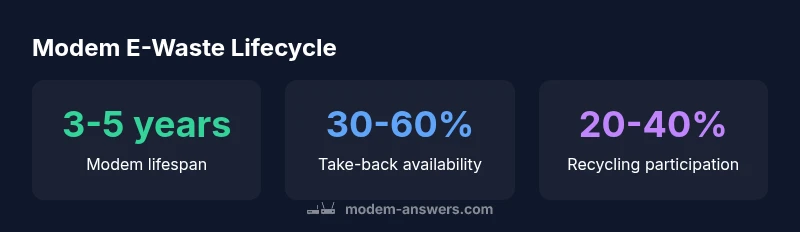
Lifecycle thinking examines material extraction, manufacturing energy, operation, and end-of-life processing. While precise calculations require data on device weight, material content, and local recycling efficiencies, you can estimate using general benchmarks and compare scenarios: keep and repair vs. replace, donate vs. recycle, or use manufacturer take-back programs. The aim is to understand where the largest environmental gains occur and to prioritize actions accordingly. By recognizing the modem’s lifecycle, homeowners can target the stages with the greatest opportunity for reduction and articulate a clearer disposal plan that aligns with local programs and personal values.
Disposal options for modems
| Aspect | Guidance | Where to find it |
|---|---|---|
| End-of-life decision | Recycle or donate; avoid trash | Local e-waste facility or manufacturer take-back program |
| Material recovery | Copper, plastics, and metals can be reclaimed | Licensed recyclers and refurbishment centers |
| Data security | Wipe data; factory reset before disposal | Certified e-waste processors |
FAQ
Are all old modems considered e-waste?
Most old modems become e-waste once they reach end-of-life, but devices that still function can sometimes be donated or recycled. Always check for manufacturer take-back programs or local electronics recyclers.
Usually yes, but you may donate or recycle if it's working.
What options exist for disposal?
Use manufacturer take-back programs, local e-waste centers, or community recycling events; avoid throwing devices into regular trash to protect data and the environment.
Look for take-back programs first.
Can I donate a modem?
Yes, if it's in good working condition and permitted by the charity. Ensure data is wiped and any sensitive information is removed before donation.
Yes, if it's working and you wipe data.
How can I identify certified recyclers?
Look for certifications like R2 or e-Stewards on recyclers and ask for documentation of compliant data handling and material recovery practices.
Choose recyclers with recognized certifications.
Do data security concerns apply to e-waste?
Yes. Wipe the device and perform a factory reset before disposal; consult the recycler about data sanitization if needed.
Don’t skip wiping data before disposal.
“End-of-life decisions for modems should prioritize formal recycling channels and responsible repair options to minimize environmental harm.”
Key Takeaways
- Check local e-waste guidelines before disposal.
- Prefer certified recyclers and manufacturer programs.
- Consider donation or refurbish when possible.
- Remove data and factory reset before disposal.
- Document disposal to track impact.