What to Do with Old Modems Australia: A Practical Guide
Learn how to responsibly dispose of old modems in Australia with practical steps, from donation and recycling to safe data wiping and provider take-back programs.


You can responsibly dispose of old modems in Australia by recycling through approved e-waste programs, donating working devices, or returning them to your internet provider. Start by checking your state’s e-waste rules, then compare charity and retailer take-back options. This guide shows practical, step-by-step actions to recycle, donate, or repurpose your old modem safely.
What to do with old modems Australia: a practical starting point
If you’re wondering what to do with old modems australia, you’re not alone. According to Modem Answers, disposing of obsolete networking gear responsibly is a simple but important part of maintaining a sustainable home. The goal is to reduce e-waste, protect your data, and keep valuable electronics out of landfills. This guide explains practical paths—donate, recycle, or repurpose—and shows how to choose the best option based on device condition, local rules, and availability of take-back programs. In many Australian households, modems are still useful for parts, learning projects, or helping someone else online, so a thoughtful disposal plan can make a real difference. Begin with a quick checklist: confirm the device model, determine if it still works, and identify nearby options before you start. By mapping your path now, you’ll avoid common mistakes and save time later.
In Australia, community programs and broadband providers often offer take-back services; many councils also run household e-waste collections. You’ll save energy and possibly help someone else repurpose a modem that still works. This section sets the stage for choosing the right path—recycle, donate, or reuse—without guesswork.
Legal and environmental responsibilities for e-waste in Australia
Australia treats electronic devices as valuable materials that should be collected and recycled through accredited programs. Local councils run household e-waste collections, and many retailers and ISPs offer take-back schemes. The rules vary by state and territory, but the core principle remains: separate e-waste from regular trash and ensure data is removed securely. When you recycle, you reduce pollution from toxic substances and conserve resources by reclaiming plastics, metals, and components. Always check the program’s acceptance criteria: some collections accept only items under specific weight limits or require the device to be decommissioned with batteries removed. If you’re unsure, contact your local council or the program operator. Modem Answers notes that following official guidelines not only helps the environment but also protects your privacy and keeps you compliant with local laws.
For renters and homeowners, understanding your rights and responsibilities makes the process smoother. Many programs offer free packaging and pre-paid shipping, especially for devices that still function. If a modem is beyond repair, you can still recycle its metal and plastic components, which supports higher recycling rates across the country.
As you plan, keep in mind that e-waste programs sometimes differ by state—Victoria’s initiatives may not be identical to those in Queensland. A quick check with state government resources ensures you’re aligned with local rules as you move forward.
Donating old modems: what counts and where to do it in Australia
Donating can extend the life of a modem that still functions and help someone else get online. Look for local community groups, schools, libraries, or charities that accept working networking devices. Before donating, reset the modem to factory settings and remove any personal configuration. If the device is outdated or not fully working, check if the recipient accepts refurbished or parts; you may still donate accessories such as power adapters or cables. Always request a receipt or donation acknowledgment for your records. Visiting charity partner sites or calling local thrift stores will confirm what items they can take and when they accept drop-offs. The goal is to keep useful hardware out of landfills while supporting community access to affordable internet.
When you donate, consider pairing the modem with helpful documentation, like basic setup steps or a list of compatible service providers. If your device is more than a decade old, reach out to maker spaces or school programs that may repurpose older hardware for teaching electronics or networking concepts. Donating can be as simple as dropping off at a local charity bin or arranging pickup with a partner organization. In many cases, these organizations will provide a simple acknowledgment and a tax receipt where applicable, helping you support the community and stay compliant with local charitable guidelines.
Recycling options: drop-off, mail-back, and retailer take-back programs
Recycling options vary across Australia; choose the path that minimizes effort and maximizes environmental benefit. Many councils operate dedicated e-waste drop-off days, while retailers and ISPs run take-back programs that accept modems at the point of sale or via mail-back kits. If you must ship a device, use the original packaging if possible and label the parcel clearly as e-waste. Some programs split the process into parts: the shell, the battery, and internal components; batteries are often recycled separately. Keep a copy of the acceptance certificate or tracking number to verify that the item was recycled properly. By using an authorized program, you help ensure metals are recovered, plastics are recycled, and hazardous materials are safely handled.
Some major retailers offer on-site drop-off points, while community groups may host quarterly e-waste events with secure data disposal options. If your modem includes a battery, be sure to follow any additional guidelines for battery disposal, as these components require separate streams. Always confirm that the program you choose is certified and operates under recognized e-waste standards. Taking the time to select the right program reduces environmental impact and supports responsible recycling across Australia.
Before you drop off, take a quick inventory of other small electronics you may dispose of at the same time; this can make your trip more efficient and increase the likelihood that your entire batch is recycled in one go.
Data hygiene and device prep before disposal
Before disposal, protect your data by performing a factory reset or erasing settings. If your modem stores settings locally, log in and restore defaults, and remove any SIM cards or USB storage. For devices with removable batteries, remove them and store them separately per program guidelines. Take photos of the device before disposal for your records. If you lack the device password, contact the provider for guidance on data clearance. Don’t reuse personal data to avoid identity theft. Note that some programs offer data wiping services or tagging for verification, which can simplify proof of disposal and improve privacy protection. Finally, ensure all cables and accessories are accounted for and placed in the same packaging or a labeled bag to prevent loss during transport.
Reuse ideas: repurposing old modems
Even if an old modem can’t meet current internet speeds, it can still serve educational or entertainment purposes.
- Create a small testing lab for network basics, allowing kids or guests to learn about passwords, ports, and basic connectivity without risking your primary network.
- Salvage components for DIY electronics projects, like repurposing plastic casings for small sensors or Arduino projects.
- Donate as spare parts to a community tech lab, repair cafe, or school workshop, where students learn about electronics repair and safe handling.
- Use the chassis as a starter case for a DIY router project if you have compatible hardware and follow safety guidelines. Always verify that any reuse remains safe and compliant with local rules for electronics handling.
A simple disposal plan: match your device to the best path
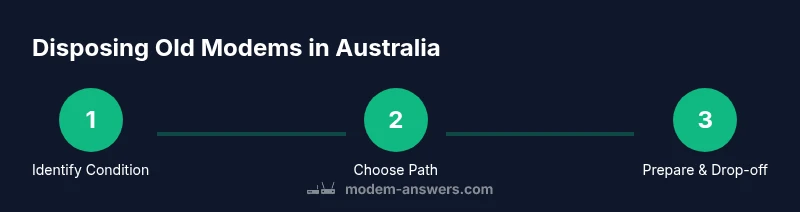
To choose wisely, assess your modem’s condition—working, partly functional, or non-functioning—and weigh the options.
If it works, donation or retailer take-back is ideal. If it’s outdated but intact, consider recycling parts. If non-working, recycling and proper e-waste programs ensure hazardous materials are handled safely. Create a simple decision tree: Working devices go to donation or take-back; non-working devices go to certified e-waste recycling; batteries go to battery-specific streams. Keep a copy of receipts or certificates for your records. This structured plan helps homeowners and renters meet environmental goals without guesswork.
Common mistakes to avoid
Common mistakes include discarding modems with batteries in regular household trash, not wiping data, or assuming a recycling program accepts all devices. Some devices may be blocked from certain drop-offs due to age or weight limits, causing frustration if you show up without checking. Skipping the factory reset can expose personal data if the device is mislaid or processed by someone else. Finally, mixing electronics with non-electronic waste in the same bag can contaminate the entire batch and delay recycling. To stay on track, take a few minutes to verify acceptance criteria, reset devices, and package them properly. Following these steps helps ensure your old modem is disposed of ethically and in compliance with Australian regulations.
Tools & Materials
- E-waste recycling bag/box(Use a government-approved drop-off or council collection bag)
- Safety gloves(Optional for handling sharp edges or cables)
- Small labels and marker(Label items to keep electronics organized during drop-off)
- Screwdriver set(Only if you plan to remove screws or batteries)
- Soft lint-free cloth(For cleaning the device before disposal)
- USB drive or paper for recordkeeping(Optional backup of settings or photos)
Steps
Estimated time: Total time: 30-60 minutes
- 1
Identify the modem's condition
Check the device’s power status and recovery options. Note model numbers and any known issues. Decide if the device is fully working, partially functional, or non-functional so you can match it to the best disposal path.
Tip: Document the model number and photos for reference, in case the program asks for proof of condition. - 2
Check for take-back options
Search for manufacturer or ISP take-back programs and local council e-waste events. Record contact details and any required forms or packaging guidelines.
Tip: Call ahead to confirm item acceptance and drop-off times. - 3
Back up settings and data
If the modem stores configuration data, back up relevant settings or write down essential network details. This prevents data loss if you need to reconnect later or share configuration with a new owner.
Tip: Keep a simple note of network name and password in a secure place until disposal is complete. - 4
Wipe data and reset to defaults
Perform a factory reset or erase configurations to protect your privacy. Remove any SIM cards or USB storage and ensure the device is restored to factory settings.
Tip: If you cannot access the device, contact your provider for official data-wipe steps. - 5
Remove batteries and SIM
If the modem has a removable battery or SIM, take them out and store separately per program guidelines.
Tip: Batteries are often recycled through a different stream; never place them in regular trash. - 6
Prepare for drop-off or shipping
Package the modem securely in its original box if possible, or use a sturdy container. Include cables but keep hazardous parts clearly labeled if required by the program.
Tip: Use bubble wrap or soft padding to prevent damage during transit. - 7
Deliver or ship to the program
Take the device to the designated drop-off location or mail it using the program’s packaging guidelines. Obtain a receipt or tracking number.
Tip: Keep the receipt or tracking number until you receive confirmation of disposal. - 8
Verify disposal and keep documentation
Confirm that the item has been recycled or donated as planned. Save certificates or acknowledgments for your records.
Tip: Store digital or physical copies for future reference and possible tax considerations.
FAQ
Is it legal to throw old modems in the general household waste in Australia?
No. Most councils require e-waste to be recycled or taken back by the manufacturer or retailer. Check your local rules and use an approved program.
No. Use an approved e-waste program or take-back option for modems in Australia.
Will my internet provider take back my old modem?
Many providers offer take-back or recycling programs, but acceptance depends on the plan and device. Contact support to confirm options.
Many providers offer take-back programs; verify with your ISP for eligible devices.
Can I wipe data myself, or do I need professional data destruction?
Factory reset or secure erase is usually sufficient for consumer devices. If the modem stores sensitive data, check if the program offers data wiping services.
Factory reset is typically enough for consumer devices, but verify with the program if you’re unsure.
What should I do with a modem that still works?
If it still works, donate or return it to an ISP take-back program so someone else can benefit. Include accessories like power adapters where possible.
If it still works, donating or returning it is ideal so someone else can reuse it.
Are there any fees for disposal?
Some programs offer free disposal; others may have small fees for non-standard items. Always ask before sending it in.
Some programs are free, others may charge a small fee—check ahead.
How long does recycling take after I drop off?
Processing times vary by program, but you can typically expect updates within a few days to a couple of weeks, depending on volume.
Processing can take a few days to a couple of weeks depending on the program.
Watch Video
Key Takeaways
- Identify disposal paths early to save time.
- Prioritize data hygiene before disposal.
- Choose donation, recycling, or reuse based on device condition.
- Keep receipts and program confirmations for compliance.