Use a Modem with SIM Card on Laptop: Step-by-Step Guide
Learn how to connect a SIM-enabled modem to your laptop, install drivers, configure APN, and troubleshoot common issues. This Modem Answers guide helps homeowners and renters stay online anywhere with clear, practical steps.


A SIM-enabled modem or USB dongle lets your laptop access cellular data without a fixed line. Insert a valid SIM, install drivers, and configure the APN to establish an internet connection. According to Modem Answers, confirm your carrier supports data on the device and keep a backup hotspot handy for coverage gaps. This method works on Windows and macOS and is ideal for travel or outages.
Introduction: Why use a SIM-enabled modem on a laptop?
Using a modem with a SIM card on a laptop can be a practical alternative when fixed broadband isn’t available or is temporarily down. This approach delivers a portable, cellular internet option that works across many locations, such as vacation homes, remote work sites, or apartments with weak Wi‑Fi. The exact steps you take depend on your hardware and OS, but the overall idea is straightforward: add cellular data to your laptop using a SIM-enabled modem or an embedded SIM. According to Modem Answers, starting with a compatible device and an active data plan is the foundation of success. In practice, this setup gives you better reliability for essential tasks like email, video calls, and cloud backups when traditional connections falter. The keyword how to use modem with sim card on laptop sits at the heart of this guide, guiding you through hardware choices, configuration, and testing. Expect to spend some time on drivers and APN settings, but you’ll gain a robust fallback for any location.
Quick-start overview
- Confirm you have a SIM-enabled modem or a laptop with an embedded SIM.
- Ensure your data plan permits tethering or mobile data use on a laptop.
- Install required drivers and software, then configure APN.
- Create a data connection and test browsing speed.
This article goes into detail on each step, with OS-specific notes and troubleshooting tips. Modem Answers emphasizes checking compatibility and having a backup option in case signal is weak or roaming costs apply.
Brand context and readiness check
Modem Answers analysis shows that success hinges on three things: compatible hardware, a valid data plan, and correct APN configuration. Before you begin, verify that your modem or SIM card is recognized by your OS, and that your plan allows device usage. If you’re traveling, check roaming agreements and potential extra charges. This preparation helps you avoid common pitfalls and speeds up setup when you’re ready to go online.
Hardware options: USB dongle vs built-in SIM modem
There are two common paths to get cellular data on a laptop. USB dongles or external modems plug into a USB port and provide a separate cellular interface. Some newer laptops include an embedded SIM (eSIM) or a dedicated modem hardware slot. USB dongles are typically easier to swap between devices, while built-in SIM options can offer a cleaner, more compact setup. When choosing, consider OS compatibility, driver availability, and whether you need multi-carrier support in a single device. The right choice depends on your mobility needs, budget, and whether you value plug‑and‑play simplicity over potential performance gains from a dedicated modem.
Carrier and SIM considerations: data plans and APN
Your SIM card must be active with a data plan that supports tethering or device use. Some plans restrict hotspot functionality or require specific configurations. APN (Access Point Name) settings are carrier-specific and crucial for establishing a data path on the cellular network. If your OS auto-configures APN, you may not need to input values manually; otherwise, you’ll enter the APN name, username, and password provided by the carrier. If you travel, save multiple APN profiles for quick switching between providers. Carrier coverage, roaming rules, and data caps influence your real-world speeds and costs, so review those terms before heavy use.
Driver installation and OS considerations
Windows and macOS have different requirements for cellular devices. On Windows, you’ll often install a vendor driver package and possibly a management utility. macOS tends to support many devices natively, but some vendors offer advanced configuration software. After installing drivers, reboot and verify the modem appears in Network Settings. Check that the device is set as the active data interface and that the operating system recognizes the SIM. If you run into driver conflicts, temporarily disable other network adapters and perform a clean install of the latest driver directly from the manufacturer website.
Step-by-step data connection creation (high-level overview)
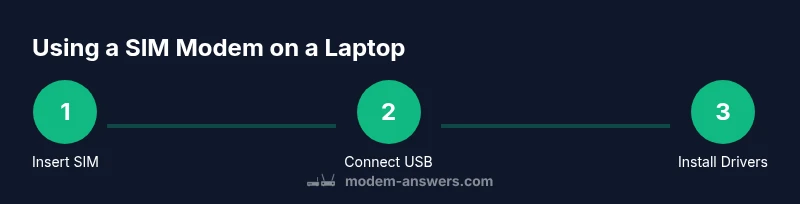
- Insert SIM into the modem or ensure the eSIM is active.
- Connect the modem to the laptop via USB.
- Install or update drivers and vendor software.
- Configure APN settings or let auto-config proceed.
- Create a new cellular data profile in the OS network settings and select the modem.
- Test the connection by loading a webpage or running a speed test.
- If available, update firmware and modem utilities.
- Have a backup option (phone hotspot or secondary SIM) in case of coverage gaps.
Note: This overview mirrors the detailed steps in the STEP-BY-STEP section and helps you understand the logical flow before you begin.
Security, privacy, and best practices
Treat cellular data like any other internet connection. Keep the device firmware up to date, enable firewall settings, and use strong device passwords. Avoid saving sensitive credentials directly in the modem’s software if possible, and only download drivers from trusted sources. When using public or shared networks, consider enabling a VPN for added privacy. If you plan to carry the modem between locations, remember to turn off the device when not in use to conserve battery and reduce potential exposure.
Maintenance and long-term use
Regularly check for firmware updates from the device manufacturer and carrier, back up APN profiles, and document your preferred connection settings. Periodic reboots can help resolve driver glitches, and keeping a spare SIM or secondary device can ensure you stay online during outages. If you notice slower speeds or dropped connections over time, test the SIM in another device to determine whether the issue lies with the carrier or the hardware. Proper maintenance extends the life of your cellular laptop setup.
Tools & Materials
- SIM card with an active data plan(Data plan should support tethering or device use; check roaming terms if traveling)
- SIM-enabled modem or USB dongle(Choose a model compatible with your OS and carrier)
- Laptop with available USB port(USB-C or USB-A depending on the modem; consider a powered hub if using several devices)
- SIM tray ejector or paperclip(Only needed for devices with removable SIM trays)
- Carrier APN details or a device with auto-APN configuration(Essential if auto-config doesn’t populate correctly)
Steps
Estimated time: 30-60 minutes
- 1
Insert SIM into modem
Power off the modem and laptop if necessary. Insert the SIM card into the modem’s SIM slot with the contacts facing the device correctly. Re-seat and ensure the SIM is firmly seated before reconnecting power and USB to the laptop.
Tip: Handle the SIM gently; avoid touching contacts and keep it clean. - 2
Connect the modem to the laptop
Plug the modem into an available USB port on your laptop. If the device is dual-mode (USB-C and USB-A), use the port closest to potential power supply lines to minimize interference.
Tip: Avoid USB hubs during initial setup to prevent driver issues. - 3
Install drivers and vendor software
Download the latest drivers from the manufacturer’s official site and install. Restart the computer if prompted and confirm the device appears in Network Settings.
Tip: Verify the driver signature before installation to prevent malicious software. - 4
Configure APN settings
If the carrier provides an APN, enter it manually in the modem’s configuration pane. If auto-configuration is available, enable it and test connectivity afterward.
Tip: Keep a note of the APN values for quick reuse during travel. - 5
Create a new cellular connection
In Windows: Settings > Network & Internet > Cellular; In macOS: System Preferences > Network. Add a new data profile and select your modem as the interface.
Tip: Name the profile clearly (e.g., Carrier LTE) to keep you organized. - 6
Test the connection
Open a browser and navigate to a webpage or run a speed test to confirm data transmission. If it fails, revisit APN settings and SIM seating.
Tip: If you’re in a roaming area, ensure roaming is enabled in the data plan. - 7
Update firmware and tools
Check the vendor site for firmware updates and install any available patches to improve stability and performance.
Tip: Firmware updates can fix known bugs and improve battery efficiency. - 8
Plan for offline backups
Keep a secondary method, such as a mobile hotspot from a phone or an extra SIM, for critical work when signal is weak.
Tip: Dual connectivity reduces downtime in poor coverage areas.
FAQ
Can I use my phone as a hotspot instead of a dedicated modem?
Yes, a phone hotspot can work as a temporary solution, but a dedicated modem often provides more stable connections and easier management for longer sessions.
You can use your phone as a hotspot, but a dedicated modem tends to be more reliable for longer work sessions.
Do I need to install drivers on Windows and macOS?
Most SIM-enabled modems require drivers on Windows; macOS often supports many devices natively, but vendor software may be needed for advanced settings.
Windows usually needs drivers; macOS may work with built-in support, but check the vendor for extras.
What if my SIM isn’t detected by the modem?
Power cycle the modem and laptop, reseat the SIM, and verify the SIM works in another device. Check APN and carrier compatibility.
If the SIM isn’t detected, reseat and reboot, then verify compatibility.
How do I know which APN to use?
APN details vary by carrier. Check the carrier’s support site or contact customer service; many devices auto-configure. Keep a saved list of APNs for travel.
APN values differ by carrier; check official settings or auto-config.
Is using a SIM modem on a laptop secure?
Using cellular data is generally secure, but keep firmware up to date and enable the device firewall. Avoid using public networks for sensitive work.
Cellular data is secure, but update firmware and use a firewall.
Watch Video
Key Takeaways
- Prepare by confirming hardware and SIM compatibility.
- Install drivers and configure APN before testing.
- Create a dedicated data profile for easy reuse.
- Test connectivity and have a backup hotspot.
- Follow security best practices to protect data.