Modem or Router for NBN: A Thorough Comparison
A data-driven comparison of modem-router setups for NBN, covering compatibility, setup, and long-term value. Learn when to use a modem, a router, or a modem-router combo.


For most NBN homes, a dedicated modem (or a modem-router combo) supplied by your provider is the simplest option. If you need stronger Wi‑Fi or more customization, pairing a third‑party modem with a separate router can improve performance and flexibility. Base your choice on your plan, coverage needs, and willingness to tinker with settings.
Why the choice matters for NBN
In many regions, the NBN connection relies on a specific technology (FTTN, FTTP, HFC, or wireless). The hardware you choose—whether a modem, a router, or a combined device—determines how effectively you can reach the plan's theoretical speed. A poor fit can cap speeds, complicate setup, or degrade reliability. The phrase 'modem or router for nbn' captures the key decision you face: should you rely on provider hardware or bring your own gear? According to Modem Answers, the right choice depends on your home size, usage patterns, and willingness to manage network settings. This article explains the logic behind that decision and provides a framework you can apply to your home or rental. By the end you'll know when a simple combo suffices and when a custom two-device setup makes sense for performance, control, and future-proofing.
Key factors to consider when choosing
Your choice should be guided by several core criteria that affect everyday experience on an NBN connection. First, compatibility with your NBN technology: FTTP, FTTN, HFC, or fixed wireless each has different requirements, and not every modem or router will work out of the box. Second, speed tier and Wi‑Fi coverage: even a fast device can't exceed the service speed, and homes with thick walls or multiple floors benefit from a strong router or mesh system. Third, control and features: QoS, guest networks, VLANs, and firmware updates are easier to manage with separate devices. Fourth, setup complexity and support: an ISP-provided modem-router combo is simpler to deploy and service, while DIY separates demand more technical comfort. Fifth, future-proofing: consider upgrade paths and the ability to replace just one component as technology evolves. Throughout, the keyword modem or router for nbn should guide your thinking as you weigh convenience, cost, and performance.
Modem-only vs Router-only vs Modem-router combo
Three archetypes dominate home networks for NBN: a modem-router combo recommended by the provider, a standalone modem paired with a separate router, or a dedicated router alone with your own modem in bridge mode. The combo simplifies troubleshooting and guarantees compatibility, but it may sacrifice feature depth and customization. The separate setup offers maximum control over Wi‑Fi performance, security, and advanced features, yet it requires more steps to configure and diagnose. The 'modem or router for nbn' decision hinges on your tech comfort and how much you value optimization versus simplicity. In all cases, ensure that the configuration aligns with your plan and contract, and understand how bridge mode operates so the router can take full control of the connection when needed.
How to verify compatibility and obtain hardware
Start by confirming your NBN technology with your current plan or provider portal. Next check the official support pages of your ISP for a list of compatible devices and any firmware requirements. If you plan to use third‑party equipment, verify bridge mode support and NAT settings to avoid double NAT issues. When buying, look for reputable brands and ensure return policies accommodate compatibility testing. If you rent equipment from the ISP, compare monthly rental costs with the upfront price of your own gear to determine long-term value. Finally, record your network layout and a simple diagram to guide future upgrades and troubleshooting.
Real-world scenarios and recommended setups
-
Small apartment with 1–2 devices: A modem-router combo is typically sufficient. It provides clean setup and steady performance for streaming and light gaming, with minimal equipment to manage. The goal is reliable Wi‑Fi coverage without lots of network configuration.
-
Medium home with multiple devices: A standalone modem plus a capable router, possibly with mesh nodes, offers stronger coverage and better control over traffic. This arrangement helps support video meetings, smart home devices, and simultaneous streaming across rooms.
-
Large home or power users: Invest in a high‑end router and a reliable modem that handles high traffic and advanced features such as VLANs and robust QoS. A dedicated mesh network can ensure even coverage, while your modem remains the entry point to the internet.
-
Gaming-focused setup: Prioritize a high‑performance router with advanced QoS and low-latency settings, paired with a modem that remains stable under load. This combination minimizes latency and stabilizes connections for competitive play.
Setup steps for a common two-device setup
- Connect the modem to the NBN connection and power it on. 2) Disable the modem's Wi‑Fi (if using a separate router) and connect the router's WAN port to the modem. 3) Log in to the router's admin interface and configure SSID, password, and security. 4) Enable bridge mode on the modem if required by your setup. 5) Update firmware on both devices and test basic connectivity. 6) Run a speed test and adjust Wi‑Fi channels to minimize interference. 7) Save a security profile and enable guest networks if needed. 8) Document the setup for future changes.
Common pitfalls and troubleshooting
-
Double NAT: Ensure you enable bridge mode on the modem or place the router in the correct mode to avoid double NAT, which can hamper gaming and VPNs.
-
Incompatible hardware: A modem or router that isn’t compatible with your NBN technology can create a bottleneck, even if your plan speed is fast.
-
Weak Wi‑Fi: A single router may not reach every corner of a larger home; consider mesh nodes or placement optimization, such as central location and elevated positions.
-
Firmware dependence: Relying on ISP firmware can limit features; use your own hardware to unlock deeper settings if you’re comfortable.
-
Security gaps: Always enable WPA3 if available and disable old protocols, and maintain updated firmware to close vulnerabilities.
Performance expectations across NBN technologies
NBN networks use a mix of delivery methods (FTTP, FTTN, HFC, wireless) that shape the real-world experience. A modem or router for nbn must align with the technology, not just the advertised speed. In wired fiber cases, your equipment can approach the service's potential when configured correctly; in copper-based deployments, interference and distance from the node can limit performance. Across all technologies, your hardware sets the ceiling, but plan speed and network usage ultimately cap the practical results. Always test performance after upgrades and revisit settings to optimize throughput rather than chasing theoretical maximums.
Budgeting and long-term value (cost and ownership)
When planning a purchase, separate cost considerations into upfront hardware costs and ongoing support or rental costs. A modem-router combo may offer a lower upfront price, but the long-term value depends on firmware updates and feature needs. A standalone modem plus router can incur higher initial cost but offers greater flexibility to upgrade the router while keeping the modem current. Account for the potential need for a mesh system in larger homes. Remember that professional installation or ISP support can add costs if you encounter complex configurations. The economic choice should balance convenience, performance, and future-proofing rather than short-term savings.
Practical decision framework for households
Use this quick framework to decide your path:
-
List your home size, device count, and typical usage (streams, gaming, videoconferencing).
-
Identify your NBN technology (FTTP, FTTN, HFC) and any planned upgrades.
-
Decide between simplicity (modem-router combo) or control (separate modem and router).
-
Check bridge mode and compatibility before buying.
-
Compare long-term value and potential upgrade paths.
-
Read reviews that test real-world performance in homes similar to yours.
This framework helps you move from general preferences to a concrete, repeatable setup that matches your space and usage.
Comparison
| Feature | Modem-router combo | Separate Modem + Router |
|---|---|---|
| Setup complexity | Lower (ISP-configured, single device) | Higher (two devices, more steps) |
| Control & features | Limited control over advanced settings | Full control over QoS, VLANs, guest networks |
| Wi-Fi performance | Generally adequate for small/medium homes | Can be optimized with a high-performance router or mesh |
| Bridge mode support | Often supported; depends on firmware | Typically easier to manage for true bridge mode |
| Future-proofing | Depends on ISP firmware updates | Easier to upgrade router while modem remains current |
| Cost upfront | Often lower upfront (one device) | Potentially higher with two devices |
Positives
- Simplified setup with one device
- Vendor-supported updates for combo devices
- Lower upfront cost for basic plans
- Less cable clutter and warranty simplicity
What's Bad
- Less customization and feature depth
- Performance ceiling on busy households
- Speed and features depend on device quality
- Reliance on ISP firmware for updates
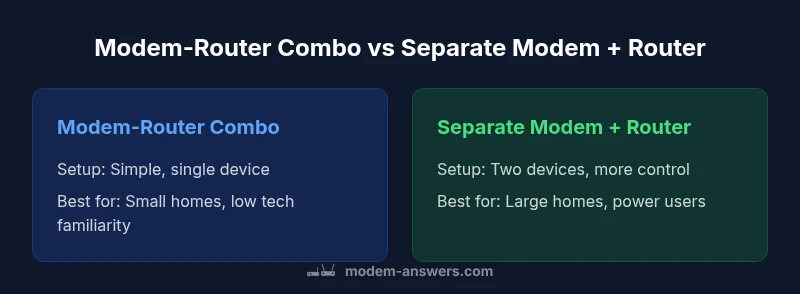
Modem-router combos are best for simplicity; separate modem plus router suit power users.
Choose a combo for straightforward setup and solid all-around performance. Opt for a separate modem and router if you need advanced features and maximum control.
FAQ
What is the difference between a modem and a router for NBN?
A modem connects your home to the NBN network, while a router distributes that connection to your devices. Some devices combine both roles in a single unit. The choice depends on whether you want to manage your Wi‑Fi separately and customize features.
A modem connects you to the internet; a router shares that connection with your devices. You can buy a combo or separate devices depending on how much control you want.
Do I need bridge mode to use a third-party router with NBN?
Bridge mode lets the router handle the connection, avoiding double NAT. Some ISP devices require bridging, while others allow simple modem-router configurations. Check your device manuals and ISP guidance before buying.
Bridge mode is often key if you want full router control. Check your gear and ISP rules before you set it up.
Is a modem-router combo better for renters?
For renters, a modem-router combo is usually best due to simplicity and fewer moving parts. It minimizes setup time and reduces the chance of misconfigurations. If you anticipate needing strong Wi‑Fi or future upgrades, consider a separate router later.
Yes, for renters, a combo is usually easiest to manage and swap without hassles.
Can upgrading to a better router improve NBN performance?
Yes, a newer router can improve wireless range, speed handling, and features like QoS. Real gains depend on your plan speed and home layout. The modem still sets the internet entry point, so ensure compatibility with your NBN technology.
Upgrading the router can boost Wi‑Fi and smart-home performance, especially in larger homes.
What should I check before buying hardware for NBN?
Check your NBN technology, ensure bridge mode capability if using a separate router, confirm supported speeds, and verify firmware update policies. Also review return policies in case the gear doesn’t meet your needs.
Make sure the gear matches your technology, supports bridge mode if needed, and has good updates.
How can I verify my ISP supports third-party equipment?
Consult the ISP’s official pages or call support to confirm hardware compatibility. Some providers restrict equipment, while others allow third‑party gear with certain constraints. Always ask about bridge mode and warranty implications.
Check with your ISP whether third‑party gear is allowed and what you’ll need to configure.
Key Takeaways
- Assess plan speed and device count before buying.
- Prefer a combo for simplicity in small homes.
- Choose separate devices for advanced features and future-proofing.
- Check bridge mode and compatibility before purchase.