How Long Do Modems Last on Spectrum? A 2026 Guide
Learn how long Spectrum modems typically last, factors that affect lifespan, and practical steps to extend life. A data-backed guide from Modem Answers, 2026.


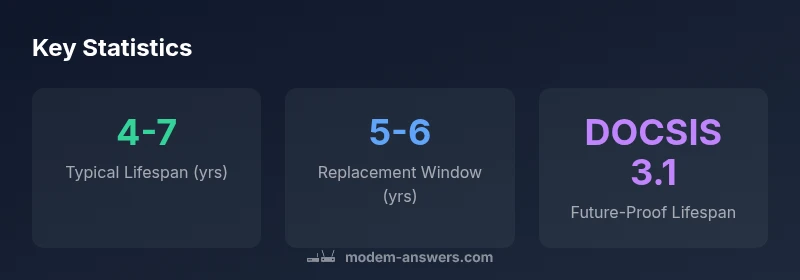
Based on Modem Answers Analysis, 2026, the typical lifespan for Spectrum modems is about 4-7 years under normal home use. Rentals and owner-owned equipment share similar life cycles, with longer life when firmware updates are kept current and the device is kept in a cool, well-ventilated area. For the question 'how long do modems last spectrum', the answer is that most households cluster around year 5 before replacement.
Understanding the question and the practical reality
When you ask 'how long do modems last Spectrum', the answer isn't a single fixed number. Lifespan depends on the hardware generation (DOCSIS standard), usage intensity, environment, and how often you apply updates. In general, consumer modems provide reliable service for several years, typically within a 4- to 7-year window. According to Modem Answers Analysis, 2026, most households find it reasonable to plan for replacement around year five to stay ahead of network upgrades and to preserve performance. The difference between Spectrum rental gear and personally owned modems matters little for the physical lifespan, but it does affect replacement timing and budgeting. A modern DOCSIS 3.1 modem tends to stay relevant longer than an older 3.0 model, especially as providers push higher speeds and more features. Throughout this article, we’ll unpack longevity principles and translate them into practical steps you can take to maximize the value of your equipment.
Lifespan by modem technology and ownership
Hardware generation matters. DOCSIS 3.0 devices, still common in older setups, often show lifespans in the 4–7 year range, depending on usage and maintenance. DOCSIS 3.1 devices, which are more common in newer networks, tend to reach 6–8 years when kept up to date and operated in favorable conditions. Whether the modem is Spectrum rental equipment or owned by you doesn't change the physics of aging, but it does influence replacement decisions: rental devices are replaced by the provider under service terms, while owned devices may be kept longer if they remain compatible with your plan. Over time, firmware stability, heat management, and the quality of components determine the practical end of life. If you upgrade to faster tiers or change providers, older modems may become mismatched with the new speeds, accelerating replacement. This nuanced view helps explain why two households with similar setups can experience different replacement timings.
Environmental and usage factors that influence longevity
- Heat and ventilation: Keep the modem in a cool, airy place; overheating accelerates wear on internal components.
- Power quality: Use a surge-protected supply; power spikes can shorten life.
- Network usage: Heavy, continuous data loads (gaming, streaming, backups) stress the modem more than light usage.
- Firmware management: Regular, verified updates can fix bugs and improve efficiency, potentially extending life.
- Physical placement: Avoid stacked devices and enclosed cabinets that trap heat.
- Age of the device: Even with good care, older hardware approaches its end of life as compatibility and efficiency degrade. Modem Answers Analysis, 2026 notes that these factors interact, producing broad lifespans with substantial overlap across tech generations.
Practical steps to extend modem life
- Place the modem where airflow is unhindered; keep it away from heat sources and direct sunlight.
- Use a quality power strip with surge protection; unplug during lightning storms when possible.
- Restart periodically to clear caches and reduce heat buildup.
- Keep firmware updated, but verify changes before rolling out updates on legacy setups.
- Avoid overcrowding the area with other devices; give the modem space to breathe.
- If your network plan changes, confirm the modem remains compatible before upgrades. Following these steps, you can plausibly push usable life toward the higher end of the 4–7 year range in typical home environments.
Authority sources
- https://www.fcc.gov
- https://www.ftc.gov
- https://www.cnet.com
When to replace your Spectrum modem
Consider replacement if you notice persistent slowdowns, frequent disconnects, or unstable performance that persists after basic troubleshooting. LED indicators can reveal faults; consult the user manual for what different blinking patterns mean. If the modem is more than about five years old or lacks compatibility with your current plan, replacement is worth evaluating. Spectrum's network evolution and the shift toward DOCSIS 3.1-compatible devices also factor into these decisions; staying with outdated hardware can cap speeds and reliability. A planned replacement cadence—particularly for households upgrading speeds or adding smart home devices—helps maintain a robust home network. In practice, setting a reminder at the five-year mark is a reasonable rule of thumb for many households.
Renting vs buying: long-term considerations
Renting a modem from Spectrum removes upkeep concerns and ensures you stay current with network requirements, but incurs ongoing monthly costs. Buying your own modem can reduce monthly expenses over time, especially if you keep the device for several years and choose a model with good longevity and reasonable upgrade cycles. When deciding, compare total cost of ownership over a projected timeframe, factoring in replacement cycles, potential warranty coverage, and the likelihood of future compatibility with new speeds. For many households, a mixed approach—keeping a rental modem for critical service periods while owning a backup or secondary device for testing new speeds—can balance risk and cost. Regardless of the path you choose, select a DOCSIS 3.1 modem or newer to maximize future compatibility.
A practical replacement plan for Spectrum customers
- Create a simple three-year plan: monitor performance, note signs, and plan replacements before issues arise.
- Keep a spare modem or a tested backup device to minimize downtime during upgrades.
- Schedule firmware checks or provider notices to align with network rollouts.
- Revisit your plan if you change internet plans or shift usage patterns.
- Document replacement dates and model numbers to simplify future upgrades.
This plan aligns with the lifespan ranges discussed above and helps you balance performance, reliability, and cost. Remember: every home is different, but the 4–7 year window remains a reasonable expectation for most Spectrum modems, with newer DOCSIS devices offering longer heads-up before replacement. The Modem Answers team suggests using this range as a flexible guideline rather than a hard rule; tailor it to your actual usage and future plans.
Lifespan snapshot by modem type
| Modem Type | Typical Lifespan | Notes |
|---|---|---|
| DOCSIS 3.0 modem | 4-7 years | Older tech, common in older networks |
| DOCSIS 3.1 modem | 6-8 years | Modern standard with better efficiency |
| Spectrum rental modem | 4-7 years | Dependent on usage and updates |
FAQ
How long do Spectrum modems typically last?
Most Spectrum modems last about 4-7 years under normal home use. Factors like usage, heat, and firmware updates influence the lifespan. If performance declines, plan for replacement.
Most Spectrum modems last several years; watch for performance decline.
Renting vs buying: which saves more in the long run?
Renting avoids upfront costs and maintenance hassles but adds ongoing fees. Buying a modem has a higher initial cost but can be cheaper over time if you keep it for several years.
Rent might be easier; buying saves money if you keep it for years.
What signs indicate a failing modem?
Slow or unstable connections, frequent drops, or overheating LEDs indicate possible failure. Run basic checks and consider replacement if issues persist after resets.
If speeds drop or it overheats, consider replacement.
How can firmware updates affect lifespan?
Regular firmware updates can improve security and stability, potentially extending usable life. However, updates may occasionally cause compatibility issues; monitor devices after updates.
Updates can help or occasionally cause issues; stay informed.
Do DOCSIS 3.1 modems last longer than 3.0?
DOCSIS 3.1 devices are generally more future-proof and efficient, delaying the need for replacement when networks upgrade.
Newer tech tends to last longer before upgrades are needed.
“A modem's lifespan depends on usage, environment, and timely updates; with proper care, you can push its usable life toward the upper end of the typical range.”
Key Takeaways
- Actively monitor modem performance to catch aging early
- Keep firmware up to date to maximize lifespan
- Choose rental vs buy based on long-term use and plans
- Plan replacements around a 4–7 year window for Spectrum modems