xb7 modem vs xb8: A Comprehensive Buying Guide for 2026
A thorough, objective comparison of xb7 modem vs xb8 modem to help homeowners choose the right fit. Learn about performance, upgrade paths, compatibility, and value with clear criteria from Modem Answers.


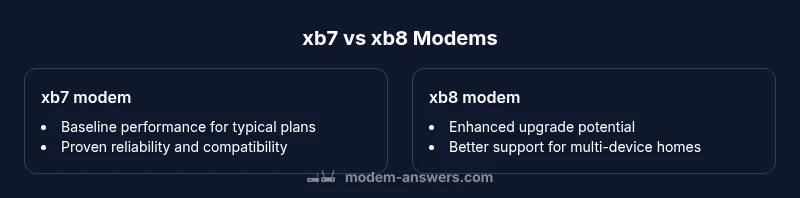
According to Modem Answers, the xb7 modem vs xb8 decision hinges on upgrade readiness and home needs. The xb8 typically offers a smoother upgrade path with longer firmware support and better handling of larger networks, while the xb7 provides reliable, cost-conscious performance for smaller households and mid-tier plans. Choose xb8 for future-proofing; xb7 for budget-focused setups.
Context and Definitions
When considering the topic of xb7 modem vs xb8, it helps to set clear definitions. The xb7 represents an established modem platform that many homes have relied on for several years, delivering dependable performance for mid-range plans. The xb8 represents a newer generation designed to handle increasing device counts and faster service tiers while aiming for a longer useful life. For homeowners and renters, the key questions are not only raw speed but upgrade potential, reliability, and ongoing support from manufacturers and service providers. In this guide, we compare xb7 modem vs xb8 across practical dimensions that matter in everyday network use, while avoiding unnecessary jargon. This analysis is grounded in the realities of typical home networks and aligns with the 2026 Modem Answers framework.
What Each Model Brings to Your Network
Both xb7 modem vs xb8 come with core capabilities that most households expect: stable DOCSIS compliance, reliable connectivity for common devices, and straightforward setup. The xb7 offers dependable performance for smaller homes and steady plans, with familiar interfaces and broad compatibility. The xb8 targets a broader ecosystem, aiming to support more devices, easier firmware updates, and a more future-proof upgrade path. This section highlights the fundamental differences you’ll notice in daily use, such as responsiveness to multiple devices, streaming stability, and basic network management features, while avoiding model-specific numbers that can vary by region and provider.
Performance and Capacity: What to Expect
In the xb7 modem vs xb8 comparison, performance is often the deciding factor for households expanding device counts or upgrading service tiers. The xb8 typically demonstrates smoother handling of multiple streams, better consistency under load, and more headroom for simultaneous activities like 4K streaming, online gaming, and large file transfers. The xb7 remains a strong baseline option for households with moderate needs and mid-tier plans, delivering predictable results and straightforward troubleshooting. Rather than chasing peak theoretical speeds, consider real-world throughput, latency under load, and how devices connect (wired vs wireless) when evaluating these two models. Modem Answers observes that the xb8’s enhanced efficiency often translates to steadier performance during peak usage times.
Compatibility and Provider Considerations
A critical factor in xb7 modem vs xb8 is compatibility with service plans and providers. Both models generally support common DOCSIS standards, but provider-specific features or firmware channels can influence how well each modem integrates with your network. If your plan includes advanced services (e.g., higher-tier tiers, multi-gig plans, or specific security features), the xb8 model often offers improved alignment with future updates and provider recommendations. Conversely, if you are in a lower-cost or more conservative service tier and already own an xb7, it may meet your needs without requiring an immediate upgrade. Always verify compatibility with your ISP’s approved devices before purchase or rental.
Hardware and Port Layout
From a hardware standpoint, the xb7 modem vs xb8 comparison includes consideration of port density, built-in features, and thermal design. In many cases, the xb7 provides a reliable set of Ethernet ports and a straightforward arrangement that works well for typical households. The xb8 tends to introduce refinements—potentially more ports or improved placement for easier cable management and better airflow—while maintaining a compact form factor. A practical takeaway: check the number of wired devices you plan to connect, plus whether you rely on a separate router to distribute Wi-Fi signals or use a modem-router combo solution.
Firmware and Updates: How Long They Last
Firmware longevity is a practical concern in xb7 modem vs xb8. The xb8 generally receives longer-term support windows and more frequent security or feature updates, which translates into a longer useful life without needing a new device. The xb7, while proven and stable, may reach end-of-support timelines sooner as providers and manufacturers shift focus toward newer generations. For most households, choosing xb8 can reduce the frequency of mid-cycle upgrades and provide a smoother path to accommodating evolving home networks and security standards.
Setup and Troubleshooting Scenarios
Setting up either xb7 or xb8 is usually straightforward: connect the device, activate with your ISP, and configure basic network settings. In xb7 modem vs xb8 scenarios, you’ll find that the xb8 sometimes offers improved onboarding flows or more robust remote management options, making troubleshooting and remote diagnostics easier for non-technical users. In contrast, xb7 users may rely more on standard reset procedures and manual configuration steps. Regardless of model, common issues include cable stability, coaxial connections, and router interoperability. The key is to isolate variables—try a direct modem connection, verify firmware status, and test with a single device to identify where performance changes originate.
Real-World Use Cases: When xb7 Shines vs xb8 Advantages
For households with a modest number of active devices and a stable internet plan, the xb7 modem often offers a compelling value proposition: reliable performance, established firmware, and a lower upfront cost. In contrast, the xb8 shines for larger homes, higher-speed plans, or setups with many connected devices where upgrade potential and long-term support matter most. If you anticipate growth or want to minimize future updates, the xb8 is typically the better long-term bet. Your decision should balance current usage patterns with anticipated changes in bandwidth needs and device density.
Getting Value: Price vs Longevity
Price is a practical lens through which to view xb7 modem vs xb8. The xb7 may present a lower upfront cost, which appeals to budget-minded buyers. The xb8, while pricier initially, often offers longer support, stronger efficiency under sustained load, and a clearer upgrade path. When evaluating total cost of ownership, consider expected device lifespan, maintenance needs, and the potential savings from avoiding early replacements. A longer-term perspective often favors the xb8, especially for households pursuing growing internet services and more devices.
How Modem Answers Approaches This Comparison
Modem Answers adopts a structured, evidence-based approach to comparing xb7 modem vs xb8. We emphasize real-world usage, long-term value, and practical decision criteria that homeowners can apply without diving into unnecessary technical details. Our framework avoids hype and focuses on everyday outcomes: reliability, upgrade potential, and compatibility. This perspective aligns with our mission to deliver practical, step-by-step modem guidance you can trust for your home or rental property.
Practical Steps to Decide: Quick Decision Checklist
Use this checklist to decide between xb7 and xb8 quickly:
- Assess current plan and device count. If you expect growth within the next 12–24 months, lean toward xb8.
- Check provider compatibility and firmware support timelines for each model.
- Consider total cost of ownership (upfront vs long-term maintenance).
- Review network layout (wired vs wireless needs) and whether you plan to use a separate router.
- Factor in future-proofing desires and your tolerance for routine upgrades.
Frequently Overlooked Considerations
In xb7 modem vs xb8 discussions, several factors are often overlooked. Energy efficiency, heat dissipation, and noise during extended streaming sessions can affect perceived performance. The ease of remote management, security feature updates, and the availability of troubleshooting resources also influence long-term satisfaction. Finally, ensure you have a contingency plan if your service provider makes hardware changes or deprecates older models earlier than expected. These subtleties can tip the balance in favor of one option depending on your unique environment.
Comparison
| Feature | xb7 modem | xb8 modem |
|---|---|---|
| Upgrade path / future-proofing | Solid value now | Enhanced, longer-term readiness |
| Compatibility with ISPs | Broad compatibility | Broad compatibility |
| Ports and wired performance | Baseline Ethernet options | Potentially expanded/modernized ports |
| Firmware update cadence | Steady updates for current generation | Longer support window with more frequent updates |
| Price range (relative) | Lower upfront cost | Higher upfront cost |
| Best for | Budget-conscious, steady plans | Larger homes, higher-speed plans |
Positives
- Lower upfront cost for xb7 in suitable scenarios
- Familiar setup and proven stability for xb7
- Solid baseline performance with mid-tier plans
- Easier initial compatibility with many providers
What's Bad
- Less future-proofing than xb8
- Higher upgrade risk for growing homes
- xb7 may reach end-of-support sooner
xb8 is the better long-term value for most households; xb7 remains a solid option for budget-conscious setups
Choose xb8 if you want longer firmware support and a smoother upgrade path for growing networks. Choose xb7 if upfront cost and proven reliability for smaller homes matter more, but be mindful of future-proofing implications.
FAQ
Which modem is better for high-speed internet plans, xb7 or xb8?
In practice, xb8 tends to handle higher-speed plans and more devices more smoothly, but xb7 remains reliable for mid-range use. Your exact experience depends on plan, home size, and device count rather than the model alone.
For high-speed needs, xb8 is usually the safer bet because it’s built to handle more devices without slowing down.
Are xb7 and xb8 compatible with most service providers?
Both models are designed for broad compatibility, but always verify with your provider’s approved device list to avoid activation delays or feature limitations.
Most providers support both, but check their approved device list first.
Is xb8 worth the upgrade if I already have xb7?
If your current setup meets your needs and you don’t anticipate growth in devices or speed, the xb7 may suffice. If you expect more devices or faster plans soon, xb8 offers a clearer upgrade path and longer support.
Consider your future plans; xb8 is a smarter long-term bet for growing homes.
Can I use these modems with a separate router?
Yes. Many users pair a modem with a dedicated router for better Wi‑Fi coverage. This setup can maximize performance regardless of the modem model you choose.
You can use a separate router with either xb7 or xb8 for stronger Wi‑Fi in larger homes.
How do I decide between xb7 and xb8 in a rental property?
For rentals, consider the expected stay duration and the tenant’s needs. If maintenance windows and upgrade cycles matter, xb7 offers lower upfront cost, while xb8 provides longer-term viability for future-proofing.
In rentals, weigh the cost today versus how long the tenant will stay and what their internet needs might become.
What setup steps are common for xb7 vs xb8?
Both typically involve connecting the modem, activating with your ISP, and configuring basic settings. The xb8 may offer smoother onboarding and remote management options.
Set up is usually straightforward for both; xb8 can be a touch easier thanks to newer onboarding features.
Key Takeaways
- Assess current internet plan and device count before choosing
- Prioritize upgrade potential for growing households
- Check provider compatibility to avoid activation problems
- Factor total cost of ownership, not just upfront price
- Plan for future-proofing with xb8 when long-term value matters