Modem Look Like Spectrum: A Side-by-Side Comparison
Analytical guide comparing Spectrum-like modem aesthetics with generic designs, focusing on design cues, compatibility, and performance to help homeowners choose visuals and functionality for their home networks.


If a modem look like spectrum, you’re seeing a design with clean lines, rounded corners, and visible LEDs similar to Spectrum’s gateway. Design cues like white matte finishes and compact form factors are common in look-alike devices. Practically, confirm compatibility with your ISP, then focus on performance and features.
Defining the Look-Alike Spectrum Concept
When people search for 'modem look like spectrum', they’re often trying to understand how a device's appearance compares to Spectrum's widely recognized gateway design. This is primarily about aesthetics, not performance, yet visuals can influence installation decisions and user trust. According to Modem Answers, many homeowners and renters prefer a modem with clean lines, rounded edges, and a low-profile footprint because it blends with modern living spaces and hides cable clutter. In practice, a Spectrum-like look typically involves white or light-gray housings, minimalist branding, vertical status LEDs, and smooth surfaces that reduce visual noise. Consumers should be aware that appearance alone does not guarantee compatibility with Spectrum or any other provider. The same hardware chassis can be repurposed across brands, with performance driven by DOCSIS version, processor capacity, and radio tuning rather than cosmetic details. In short, the phrase modem look like spectrum highlights fashion over firmware, though some look-alikes do vendor-specific optimizations that improve setup experience for Spectrum customers. The key is to balance looks with the actual network capabilities you need, such as DOCSIS support, Ethernet ports, and heat management.
Visual design cues seen in Spectrum-like modems
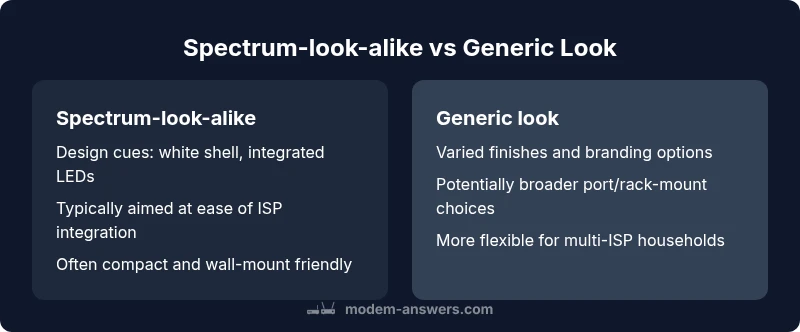
Spectrum-like modems typically share design cues that signal familiarity and ease of integration into active households. A white matte plastic shell, rounded corners, and a slim, boxy silhouette are common to reduce visual noise on mantels or media consoles. LEDs are usually arranged in a vertical strip or along the edge of the front face, providing immediate status feedback without distorting the room’s lighting. Branding tends to be understated, with subtle logos or none at all, so the device appears as a neutral element rather than a focal point. The goal is to make the modem disappear into the installation space while still offering clear indicators for power, connectivity, and network activity. It’s important to recognize that these cues influence user perception and perceived ease of use, which can translate into a smoother setup experience for renters and first-time homeowners. According to Modem Answers, brand familiarity can reduce the cognitive load during installation and initial troubleshooting, even if the underlying hardware is vendor-agnostic.
Aesthetics vs performance: balancing looks with network realities
A Spectrum-inspired appearance does not guarantee faster speeds or broader compatibility. Real-world performance hinges on DOCSIS standard support (e.g., DOCSIS 3.1), processor power, RAM, and modem firmware optimization. A look-alike modem may share a similar enclosure with Spectrum’s devices, yet differ in internals such as chipset, radio tuning, and heat management. Renters and homeowners should distinguish between cosmetic design and functional features: pulse-width modulated fans or silent cooling paths can influence long-term reliability, while USB ports or multi-LED indicators support advanced networking tasks. The practical takeaway is to check provider compatibility and supported features first, then evaluate how much the exterior design matters for your space. If you want a clean aesthetic but also require robust performance, prioritize devices that explicitly state DOCSIS capabilities, channel bonding options, and Ethernet port availability, rather than relying solely on the exterior.
Technical foundations behind modem hardware
Behind every modem’s look lies a complex set of components that determine performance and reliability. Spectrum-like aesthetics may mask different hardware configurations, including chipset choices, memory capacity, and DOCSIS support levels. The most important differentiators for home networks are DOCSIS version (3.0 vs 3.1+), CPU speed, RAM size, and the presence of features like OFDMA, MU-MIMO, and advanced security firmware. A device with a glossy finish or a prominent Spectrum-like logo may use the same enclosure as other vendors, but the underlying software and hardware can vary significantly. For homeowners, the practical implication is to verify that the modem supports the service tier you subscribe to, and to review independent performance tests when possible. Clear indicators of capability include multiple Ethernet ports, gateway mode options, and documented compatibility with major cable providers.
Installation, placement, and home integration
Placement impacts both aesthetics and network performance. Spectrum-look modems often feature compact form factors designed for shelf or wall mounting, minimizing clutter and facilitating clean cable management. When choosing a spot, consider ventilation: tight cabinets or TV stands with limited airflow can cause heat buildup that throttles performance. If you’re pursuing a Spectrum-inspired look, pairing the modem with a matching router or a discreet mesh system can preserve the visual harmony while delivering strong coverage. Cable management accessories, like cable raceways and zip ties, help keep the installation tidy. Lastly, ensure the chosen location has accessible outlets and a straightforward path to the primary coax input for reliable signal integrity. A well-placed modem will perform more consistently and look better in your living space.
How to evaluate if a Spectrum-like modem is right for you
When assessing Spectrum-like devices, begin with a simple decision tree: confirm ISP compatibility, confirm DOCSIS support, and confirm port count. Then compare the interior hardware, firmware update cadence, and the availability of features like bridge mode, QoS, and parental controls. Aesthetics should be evaluated only after functional requirements are satisfied. As part of due diligence, review user feedback about reliability and support for look-alike devices in your region. Aesthetics matters for living spaces, but long-term satisfaction comes from stable connections, predictable speeds, and resilient firmware. In practice, create a short checklist: provider compatibility, DOCSIS version, Ethernet ports, heat management, and ease of mounting. If the device checks these boxes, its Spectrum-inspired exterior can be a bonus rather than a burden.
Common myths and misconceptions about Spectrum-like designs
Several myths persist around Spectrum-inspired modems: that looks equal better performance, that all white devices are Spectrum-branded, or that a logo guarantees top-tier firmware updates. In reality, design is separate from performance. A white, sleek modem might be a look-alike with identical hardware to competitors, while a different-looking model could outperform it due to more powerful processing and newer firmware. Another misconception is that a Spectrum-like device must be current; some older units can deliver solid performance if they support your service tier and are still receiving security updates. Finally, some renters worry about warranty coverage for unbranded devices, but most vendors provide standard warranties independent of branding. The practical takeaway is to separate appearance from capability, test the device’s throughput, and verify firmware support before purchasing.
Future-proofing and maintenance considerations
A Spectrum-look modem should not be treated as a static purchase. Network standards evolve, firmware updates become more frequent, and provider requirements can change. When evaluating look-alike devices, look for ongoing firmware support and easy replacement options. Consider modular solutions that allow you to upgrade the router or gateway separately if needed. Regularly renewing firmware, enabling security protections, and validating compatibility with your ISP during a scheduled maintenance window keep your network secure and reliable. If you anticipate service plan upgrades or new equipment in the next 2–3 years, prioritize devices with upgrade paths and clear documentation from credible vendors.
Comparison
| Feature | Spectrum-look-alike modems | Generic non-Spectrum-look modems |
|---|---|---|
| Design cues | White matte finish, rounded edges, vertical LEDs | Varied finishes, less consistent LED placement |
| Brand compatibility | Often optimized for Spectrum or similar providers | Broad ISP compatibility, no provider-specific branding |
| Ports & mounting | Ethernet, power; common wall-mount options | Often the same ports; mounting varies by model |
| Firmware & support | Vendor or Spectrum-oriented firmware updates | Vendor-driven updates; support varies by brand |
| Price range | $60-$150 | $40-$120 |
| Best for | Owners wanting familiar aesthetics and easy Spectrum integration | Budget-conscious buyers or multi-ISP households |
Positives
- Aesthetically versatile design that blends with modern interiors
- Compact footprint and wall-mount options optimize space
- Potential for familiar setup experience in rental homes
- Easy to share a single visual language with other network devices
What's Bad
- Possible confusion about warranty or support for unbranded devices
- Look-alike devices may lag in firmware cadence compared to brand-name rivals
- Design-focused choices might overshadow essential performance features
- Compatibility pitfalls if provider-specific features are required
Spectrum-look modems balance aesthetics with practical network needs
Choose Spectrum-look devices if you value a familiar, tidy appearance and provider integration. If performance or broad ISP compatibility is the priority, prioritize function-first options and verify firmware updates and port availability.
FAQ
What does it mean when a modem looks like Spectrum?
It usually refers to the exterior design cues such as a white matte shell, rounded edges, and LED indicators that resemble Spectrum’s gateway aesthetics. It does not guarantee provider compatibility or performance.
Spectrum-like looks describe the exterior style, not the internals. Always verify compatibility and features before buying.
Are Spectrum-like modems legal or legitimate to buy?
Yes, look-alike designs are legal as long as the device is sold by a legitimate manufacturer and complies with your local regulations. Ensure it supports your service tier and has proper firmware updates.
Yes, as long as you buy from reputable brands and check compatibility with your service.
Will Spectrum provide firmware updates for non-Spectrum devices?
Firmware updates depend on the device vendor and the provider’s certification. Spectrum itself typically updates its own gateways; third-party devices receive updates from their manufacturers. Always verify update policies before purchase.
Updates come from the device maker, not every provider, so check the vendor’s policy.
How can I tell if a Spectrum-look modem is compatible with my service?
Check the device’s DOCSIS version, channel bonding support, and the provider compatibility list. Contact customer support or review official hardware compatibility guides from your ISP.
Look for DOCSIS version and supported features on the box or manufacturer site.
Are there security concerns with look-alike modems?
Security depends on firmware updates and configuration, not appearance. Choose devices from reputable brands and enable automatic updates and strong admin passwords.
Appearance doesn’t affect security—keep firmware current and credentials strong.
Key Takeaways
- Assess aesthetics only after ISP compatibility and DOCSIS support
- Use a clear installation plan to maintain a clean look
- Check firmware updates and security features before buying
- Balance visual appeal with actual performance needs
- Consider future-proofing through upgrade paths