cga4234: Quick Fix Guide for Home Modems
Diagnose and fix the cga4234 error code with a practical, step-by-step flow, common causes, quick tests, cost ranges, and guidance on when to call a pro.


The error code cga4234 signals a temporary fault in the modem's handshake with your provider's gateway. It's most often caused by a brief outage, a mismatched IP address, or a stale DHCP lease. The quickest fix is a power cycle, followed by a quick IP check and reconnect test. If problems persist, escalate to a network reset. According to Modem Answers, start with these steps for the fastest recovery.
What cga4234 Means for Your Network
cga4234 is an error code that signals a failure during the modem's attempt to obtain a valid internet address from your provider's gateway. In plain terms, the handshake between your home equipment and the provider's equipment didn't complete. According to Modem Answers, this often points to a brief outage, a mismatched IP address, or a stale DHCP lease that needs refreshing. Recognize symptoms early: slow page load, intermittent drops, or a solid WAN LED that never lights green. If you see a persistent 'No Internet' status, you are likely dealing with one of these root causes. This guide gives you a practical diagnostic flow and a clear, step-by-step fix you can perform tonight to restore service. You’ll also learn what to expect if you need to escalate, including cost ranges and professional help triggers.
Diagnostic Flow: Symptom → Causes → Fixes
- Symptom: No Internet on any device, bright or pulsing WAN LED, or a provider’s status page showing outages.
- Causes (ordered by likelihood):
- high: Service outage or provider-side fault.
- medium: IP address conflict or DHCP lease issue.
- low: Modem firmware glitch or misconfiguration.
- Fixes (prioritize easy wins):
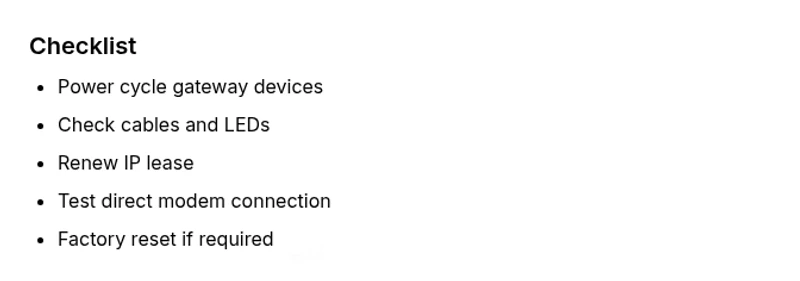
- easy: Power cycle both modem and router.
- easy: Check all cables and ensure LEDs indicate normal power and link status.
- medium: Renew IP lease and flush DNS from your device.
- hard: Factory reset of modem/router after backup and verification, then re-provision from the ISP.
This diagnostic flow helps you identify root causes quickly and decide whether you can fix it yourself or should contact your provider. The steps below expand on the most common fix and what to do if the issue persists.
Most Common Fixes You Can Try Now
-
Power cycle the entire gateway stack: unplug both devices, wait 60–90 seconds, plug the modem back in, then the router. Give 2–3 minutes for re-synchronization. This clears transient handshakes and often restores the DHCP process.
-
Verify connections and LED status: ensure all cables are snug and the power LED is steady, not blinking. If the WAN/Internet LED remains off, the issue is likely upstream or a lease problem.
-
Renew the IP lease on your device: on a computer or phone, forget the network and reconnect, or run a renew IP command. This forces the device to request a fresh address from the gateway and can resolve conflicts.
-
If you have a separate router, connect a computer directly to the modem via Ethernet for a direct test. If you see Internet on the computer but not on Wi‑Fi, the problem may be the router rather than the modem.
If none of these fixes work, move to the “Other Causes” section or escalate to your ISP for a service check.
Notable Quick Wins and Why They Help
- A clean power cycle clears stuck DHCP leases and resets the handshake. It is the fastest way to recover from transient outages.
- Direct connection to the modem isolates the problem to the router or the modem itself.
- Renewing an IP lease forces the gateway to reissue an address, which fixes conflicts that can trigger cga4234.
These steps are designed to be performed with minimal tools and no specialized technician hardware. If you still lack Internet after this, it’s time to assess provider-side faults and potential hardware replacement.
Other Causes to Consider and How to Address Them
- Firmware glitches: Outdated firmware can cause unstable handshakes. Check for available updates in the modem UI or via ISP-provisioned portal. If updating fails, proceed with a factory reset after saving current configurations.
- DHCP server issues: The provider’s DHCP server might be overwhelmed or misconfigured. After a reset, the gateway may require a new IP pool assignment.
- Hardware fault: A failing modem or router can produce intermittent handshake failures. Run a speed test to determine if performance degrades consistently. If so, consider a replacement within the cost range provided by your provider.
Each of these causes may require different levels of intervention and could incur costs if replacing hardware becomes necessary.
Safety, Costs, and When to Call a Professional
- Safety: Do not open the power supply or attempt hardware repairs beyond basic resets. Always unplug devices before handling cables.
- Costs: Hardware replacement can range from roughly $30 to $150 for consumer-grade devices, plus possible service call fees if you require a professional visit.
- When to call a pro: If the problem persists after all DIY steps, or if you’re on a managed service with provider-supplied equipment, contact your ISP for a service visit. The problem may be upstream or require a technician to verify line integrity.
Prevention: Keep cga4234 from Returning
- Schedule periodic reboots of the gateway to refresh DHCP leases and firmware.
- Monitor outages via your provider’s status page and social channels, so you’re prepared for service interruptions.
- Maintain up-to-date firmware and preserve a simple, documented backup of your configuration for quick restoration after resets.
Steps
Estimated time: 20-30 minutes
- 1
Verify outage status and prepare gear
Check the provider’s status page or social channels to confirm any outages in your area. Grab the modem, router, power adapters, Ethernet cable, and a mobile device for testing. This helps you decide if the issue is local or provider-wide.
Tip: Note the time you first saw the outage to help correlate with provider updates. - 2
Power cycle gateway devices
Unplug the modem and router. Wait 60-90 seconds, then plug the modem back in first, followed by the router after about a minute. Allow 2–3 minutes for re-sync and test connectivity.
Tip: A longer wait slightly increases the chance of a clean handshake on reboot. - 3
Check cables and LEDs
Ensure all connections are snug (power, coax/cable, Ethernet). Confirm the power LED is solid and the Internet/WAN LED behaves normally after reboot. If LEDs blink or stay off, note the pattern for the provider or technician.
Tip: Avoid wiggling cables while the device is powered; unplug to reseat if necessary. - 4
Renew IP address and test devices
On your computer or smartphone, forget the Wi‑Fi network and reconnect, or run an IP renewal from the device settings. Run a quick speed test or load a few websites to gauge whether access is restored.
Tip: If you use a static IP, switch to DHCP temporarily to obtain an address automatically. - 5
Direct modem test (no router)
If possible, connect a computer directly to the modem with Ethernet to rule out router issues. If the test succeeds, the router may be misconfigured or failing.
Tip: Document the test results and compare with previous baselines. - 6
Factory reset if necessary
As a last resort, perform a factory reset on the modem (and router if needed). Re-provision from the ISP or your backup settings and re-test. Do not reset if you’re under a managed service without provider guidance.
Tip: Back up essential settings before resetting to avoid reconfiguration delays.
Diagnosis: Error code cga4234 displayed during startup or after a reboot
Possible Causes
- highService outage or provider-side fault
- mediumIP address conflict or DHCP lease issue
- lowModem firmware glitch or hardware fault
Fixes
- easyPower cycle the modem and router
- easyCheck and reseat all cables; verify LEDs
- easyRenew IP lease / reconnect devices
- mediumFactory reset and re-provision if outage persists
FAQ
What does error code cga4234 indicate?
Cga4234 indicates a handshake failure between your modem and the provider's gateway, often due to an outage, IP conflict, or a stale DHCP lease. It typically resolves with a reset and IP renewal, but may require provider support if the outage persists.
Cga4234 means the modem couldn't complete the address handshake. Start with a power cycle and IP renewal; if it continues, contact your provider.
Is cga4234 caused by my equipment or the provider?
Most commonly, cga4234 is provider-related due to outages or DHCP server issues. Personal equipment problems are possible but less frequent. Isolate with a direct modem test to determine fault origin.
Most likely provider-side, but be sure to test with a direct modem connection to be sure.
Can I fix cga4234 myself?
Yes. Easy fixes include power cycling, cable checks, and IP renewal. If those don’t help, a factory reset after backup or a provider-assisted repair may be required.
Yes—start with the basics, then escalate if needed.
How long does it take to fix this error?
Most DIY fixes take 15–40 minutes. If the outage is on the provider side, you may have to wait for service restoration, which could take several hours.
DIY fixes usually take under an hour; outages can take longer depending on the provider.
When should I call a professional?
Call a professional if outages persist after all steps, or if you’re on a managed service with provider equipment. A technician can verify line integrity and replace faulty hardware if needed.
If problems persist after DIY steps, contact your provider or a technician.
Are there cost estimates for repairs or replacements?
Costs vary by hardware and service. Modem replacements generally range from modest to mid-tier prices, typically $30–$150, with service visits potentially adding a fee.
Expect replacement gear to run roughly between $30 and $150, plus possible service fees.
Watch Video
Key Takeaways
- Start with a quick power cycle of gateway devices
- Isolate the issue by testing direct modem connection
- Renew IP lease to clear conflicts
- Call the pro if outages persist or hardware replacement is needed