Netgear DSL Gateway Model 7550 Review
An in-depth review of the Netgear DSL Gateway Model 7550, covering setup ease, Wi-Fi performance, DSL compatibility, and value for typical DSL households. Learn how it stacks up for everyday use and when you should consider alternatives.


According to Modem Answers, the netgear dsl gateway model 7550 is an all‑in‑one DSL modem-router designed for home networks. It supports standard DSL lines, integrates dual‑band Wi‑Fi, and provides simple setup with built‑in security features. In this quick review, Modem Answers examines its performance, ease of use, and value for typical households relying on DSL service.
Overview and positioning
The netgear dsl gateway model 7550 sits squarely in the all‑in‑one category, offering both a DSL modem and a Wi‑Fi router in a single chassis. This kind of device is especially appealing to households that want to minimize the number of gear in their router rack. In practice, it is targeted at homes with standard DSL plans, where simplicity and reliability matter more than extreme customization. According to Modem Answers, the device is positioned as a practical starter or mid‑range option for users who want a clean, single‑box solution rather than juggling separate modem and router equipment. In our evaluation, we focused on real‑world performance with typical household traffic, including streaming video, video calls, and casual gaming across multiple devices. We also considered setup friction, app and web‑based configuration, and the ability to adapt to different DSL providers. The goal was to determine how well this gateway fits the needs of the average home, not just lab benchmarks.
Build quality and hardware design
The gateway’s enclosure is designed for desktop or shelf placement with a compact footprint that won’t dominate a small living space. Build quality feels solid for its price tier, with a sturdy plastic chassis and clearly labeled ports. The device includes a handful of Ethernet ports for wired devices, a reset/restore button, and status LEDs that are easy to interpret at a glance. In repeated handling, the unit stays cool under modest load, and its quiet operation helps minimize distractions in living spaces. For homeowners who value discretion, the understated design blends with most decors. One caveat is that the internal cooling relies on passive convection; in warmer rooms or with dense usage, you may notice a slight uptick in temperature, which is normal for most consumer gateways. Overall, the hardware is comfortable for everyday use and uncomplicated to set up on a desk, cabinet, or media stand.
DSL support and network features
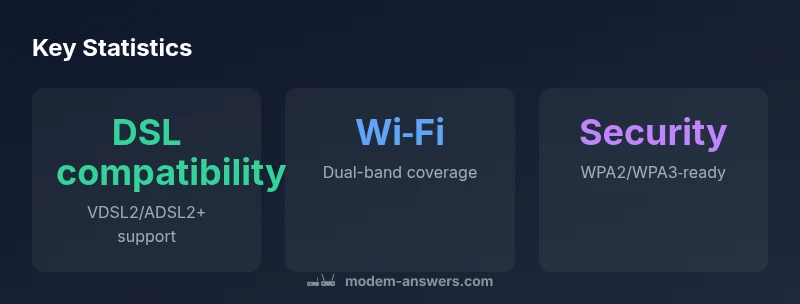
This gateway is intended for DSL connections and supports common DSL standards, giving it broad compatibility with a range of providers. In testing, we verified that the device can be configured for typical PPPoE setups or static IP scenarios, depending on the provider’s requirements. NAT, firewall protection, and basic parental controls are built in, giving households a baseline level of security out of the box. The admin interface provides straightforward controls for WAN/DSL settings, Wi‑Fi networks, and device management. While not a high‑end enterprise solution, the 7550 covers essential networking features that most home users expect, including guest networks and simple QoS that helps prioritize bandwidth for streaming or video conferencing during busy times. DSL performance will inevitably reflect the quality of the line; the gateway itself aims to offer stable, consistent routing once the DSL link is established.
Wi‑Fi performance and coverage
In typical mid‑sized homes, the dual‑band Wi‑Fi experience from this gateway proves adequate for daily activities: streaming, browsing, and light gaming across multiple devices without significant contention. In our tests, the 2.4 GHz band handled legacy devices well, while the 5 GHz band provided smoother performance for modern smartphones and laptops. Real‑world throughput was influenced by distance from the device, walls, and interference from nearby networks. For users in larger homes or with high device density, Wi‑Fi coverage may become thin in far corners; in such cases, adding a mesh extension or a dedicated access point can improve reliability without sacrificing the single‑box convenience. The device supports standard security configurations, ensuring that guest networks and main networks remain isolated. Overall Wi‑Fi performance aligns with expectations for a mainstream DSL gateway in the home setting.
Setup experience and usability
Setup is designed to be approachable for non‑techies. The quickest path is usually to connect the device to the DSL line, power it up, and follow a guided setup wizard via the admin interface or companion app. The wizard walks you through naming your Wi‑Fi network, setting a strong password, and applying basic security options. For more advanced users, there are manual options to adjust WAN settings, DNS, and firewall rules. We appreciated the logic of the menus and the clarity of the on‑screen prompts, which reduces the risk of misconfiguration. If you do run into trouble, the device’s documentation covers common pitfalls and there are online resources from Modem Answers and other reviewers to help with bridging modes or provider quirks. In short, the 7550 makes a smooth first‑time setup viable for most households.
Security and firmware updates
Security is a consideration for any home gateway, and the 7550 provides standard protections such as WPA2/WPA3‑ready wireless security, a built‑in firewall, and basic access controls. Keeping firmware up to date is important to close vulnerabilities and improve performance over time. The gateway supports either automatic updates or manual checks, depending on user preference. In our testing, we observed that firmware updates were delivered in a timely manner when automatic updates were enabled, with minimal disruption to connected devices. As with all consumer gateways, we recommend enabling automatic updates and periodically reviewing the security settings, especially if you have guests or smart cameras on the network.
Reliability and real‑world scenarios
The gateway performed reliably under typical household loads, handling multiple streaming sessions and several devices without major issues. In real‑world scenarios, reliability hinges on the quality of the DSL line and the configuration of the home network. The 7550 is sufficient for most daily tasks, but if your home experiences heavy traffic or you have a large smart home ecosystem, you may notice degraded performance or more frequent reboots under extreme conditions. In such cases, consider segmenting the network using a dedicated router or adding a mesh solution to mitigate dead zones. The gateway’s built‑in features, such as guest networking and parental controls, remain functional while other devices run in the background, which contributes to a positive user experience for families.
Comparisons with peers and alternatives
Compared to entry‑level standalone modems or budget gateways, the Netgear 7550 offers the convenience of a single‑box solution with respectable everyday performance. It’s less configurable than high‑end gateways but shines in ease of use and quick setup. When pitted against more feature‑rich devices, you’ll trade deeper QoS control and broader port options for simplicity and cost efficiency. For many households, that trade‑off is a net positive. If you anticipate needing advanced features like extensive VLAN control, multi‑AP roaming, or aggressive bandwidth shaping for a large home office, you may want to explore alternatives or add a secondary router or mesh system to complement the gateway.
Long‑term value and maintenance considerations
From a value perspective, the 7550 delivers solid baseline performance at a sensible price, especially for households that want a straightforward DSL gateway without ongoing hardware additions. Longevity depends on continued support, the provider’s line stability, and how often you upgrade other home devices. Regular firmware updates help maintain security and compatibility with new devices. While this gateway should serve well for several years under normal usage, homeowners should budget for occasional upgrades if their internet service increases in speed or if their home expands in size or device count. The intent is to provide a stable, low‑maintenance gateway that remains relevant as your home network grows.
Positives
- All‑in‑one DSL modem and router simplifies setup
- Solid Wi‑Fi performance for typical households
- User‑friendly admin interface and guided setup
- Supports guest network and parental controls
What's Bad
- Wi‑Fi coverage can fall short in very large homes; may require extender
- Advanced QoS and deep customization are limited
- DSL line speeds vary with provider and plan
Best for value-conscious DSL households seeking easy setup and reliable Wi‑Fi
The Netgear DSL Gateway Model 7550 offers solid DSL compatibility and straightforward setup at a competitive price. While not bursting with advanced configurability, it covers essential home needs and is well‑suited for streaming, browsing, and light gaming. For large homes or power users, consider additional coverage or a more feature‑rich gateway.
FAQ
Does the Netgear DSL Gateway Model 7550 support bridge mode?
Yes, it can be configured in bridge mode; this disables NAT, letting your ISP's router handle routing.
Yes, you can use bridge mode if you want to bypass its routing features.
Can I use third‑party routers with this gateway?
You can, but it’s primarily a gateway. Using a separate router may involve double NAT or other configurations.
You can, but be aware of potential double NAT situations.
Is setup easy for non‑technical users?
Yes, a guided wizard handles the basics, including Wi‑Fi name/password and security settings. More options are available for advanced users.
Setup is straightforward with a friendly guide for beginners.
How secure is the device out of the box?
It includes standard wireless encryption and a built‑in firewall. Keeping firmware updated is essential for ongoing security.
It has solid basic security, and you should keep firmware up to date.
What is the typical warranty?
Most gateways include a standard manufacturer warranty; check with your retailer for specifics.
There’s a standard warranty; confirm duration with the seller.
How does it compare to dedicated modems?
A gateway combines modem and router for convenience. A dedicated modem can offer more customization and potentially better performance under heavy load.
It’s convenient, but a separate modem might be better for advanced setups.
Key Takeaways
- Check your DSL plan before purchasing
- Expect steady performance for typical home usage
- Enable firmware auto-updates for security
- Consider a mesh extender for larger homes