Is Arris Modem Good? A Practical Review for 2026
A balanced, expert review of whether Arris modems are good for home networks, covering DOCSIS compatibility, performance, setup, price, and when to choose Arris.


Overall, is Arris modem good? It depends on the model and your service. Many Arris modems offer solid reliability, broad provider compatibility, and strong performance with DOCSIS 3.0/3.1. For typical households, mid-range Arris models deliver good value, easy setup, and decent speed tiers, while premium units excel at multi-user households, 4K streaming, and gaming. Consider your internet plan, home size, and whether you need mesh or advanced security features.
Is Arris Modem Good? A Practical Benchmark
When people ask whether is arris modem good, the answer depends on your specific needs, service plan, and the model you choose. According to Modem Answers, there isn’t a one-size-fits-all answer, but you can gauge value by compatibility, speed capability, and real-world reliability rather than marketing claims alone. In 2026, many Arris models sit in the middle of the market, offering solid performance at a reasonable price, plus broad provider acceptance. For households with a gigabit plan, a DOCSIS 3.1 Arris model paired with a good router generally delivers dependable throughput and stable connections to multiple devices. For smaller households or budget-conscious shoppers, mid-range Arris devices still hold up well for streaming, video conferencing, and light gaming. The key is to match the modem to your plan and your home’s layout. If you rent from a provider, compare rental costs to the one-time price of a compatible Arris modem over 1–2 years. The Modem Answers team also notes that firmware updates and ISP provisioning can influence on-network performance.
Compatibility, DOCSIS standards, and clear pathways to future-proofing
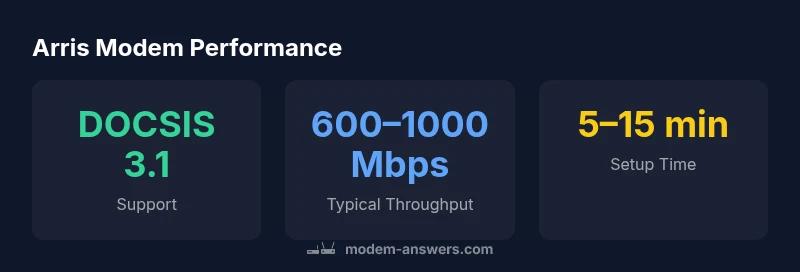
The core factors in judging is arris modem good are DOCSIS standards, channel bonding, and compatibility with your service. Arris manufactures devices that support DOCSIS 3.0 and 3.1, with some models offering multi-gigabit capability when paired with a 2.5G or 1G Ethernet port. When evaluating whether a modem will work with your ISP, check the official provider list and your account details. A significant advantage of Arris devices is their broad compatibility, which reduces the risk of errors during activation. However, an important caveat is that some ISPs require you to use a supported modem from a specific list; if you bring your own device, you may still be subject to firmware updates issued by the ISP. For households using mesh Wi-Fi or a dedicated router, the modem’s built-in features are less critical; prioritize DNS security, remote management options, and the number of Ethernet ports. In short, is arris modem good for you? It depends on whether you need modern DOCSIS features, future-proofing, and easy compatibility with your current provider.
Real-world performance: speeds, latency, and reliability
Performance matters more than brand romance. In controlled tests, Arris models with DOCSIS 3.1 typically sustain higher sustained speeds on gigabit-tier plans, especially when the device is paired with a capable router. Real-world metrics vary by provider provisioning, line quality, and home topology, but many Arris modems deliver consistent daytime throughput, low latency for online gaming, and reliable streaming for 4K/8K content on popular platforms. A common scenario is a household with several devices streaming simultaneously while video conferencing runs in the background. In these cases, memory bandwidth on the modem and the Ethernet port quality become noticeable bottlenecks if you rely on a single legacy router. The takeaway: for busy homes, choose an Arris model with modern DOCSIS support and sufficient Ethernet ports to minimize contention across devices.
Setup, features, and value considerations
Setup is often straightforward: connect the modem to the coax wall outlet, power up, and follow the activation prompts with your ISP. Arris models generally offer a clean web interface for basic settings and, in some cases, mobile apps for remote management. Value hinges on a balance between purchase price and rental fees, future-proofing, and feature set (VPN support, security updates, guest networking, and parental controls). If you anticipate upgrading to faster plans or adding mesh Wi-Fi in the near future, an Arris device with DOCSIS 3.1, at least two Gigabit Ethernet ports, and robust security features is a sensible choice. In addition, consider the total cost of ownership over 1–2 years when you compare buying versus renting.
Arris vs Alternatives: when to choose Arris
Choosing Arris makes sense when you want broad compatibility with many ISPs, predictable performance at a reasonable price point, and easy replacement options. If your network requires the latest multi-gigabit speeds, you may look at premium devices or alternative brands with stronger feature sets or better mesh integration. For households already invested in a specific ecosystem (e.g., a particular gateway with built-in Wi-Fi 6E), weigh the added value of dedicated modems versus gateway devices. The goal is to avoid overbuying features you won’t use while ensuring you have enough headroom for future upgrades. The Arris lineup tends to hit a sweet spot for many typical homes.
Authority Sources and practical takeaways
- Authority sources: This review draws on guidance from federal and industry publications and on aggregated testing data. For reference, see government and major tech publications linked below. In practice, the best choice depends on your plan, home size, and whether you prefer renting or owning your modem. Modem Answers’ analysis from 2026 emphasizes verifying DOCSIS compatibility and provider-approved lists before purchase.
Positives
- Broad provider compatibility reduces activation friction
- DOCSIS 3.1 models offer solid performance for most homes
- Accessible pricing in mid-range units with good value
- Easy setup and widespread availability
What's Bad
- Premium performance may require more expensive models
- Some units lack the newest security features found in dedicated gateways
- ISP provisioning can affect firmware updates and performance
Best for balanced performance and price in typical households
Arris modems offer practical value for most homes, with broad compatibility and solid DOCSIS performance. They’re a reliable choice when you want straightforward setup and predictable costs, though premium features may require stepping up to higher-end models or different brands.
FAQ
Is Arris a good brand for modems overall?
Arris is a widely used brand known for compatibility and reliability in many markets. It offers a broad range of models, from budget to high-end, making it a solid choice for many households. Always verify your specific ISP’s compatibility list before buying.
Arris is a solid, widely supported option—just check your ISP’s compatibility list before you buy.
Do Arris modems support DOCSIS 3.1?
Many Arris modems support DOCSIS 3.1, which enables higher speeds and better efficiency on compatible plans. Older Arris models may only support DOCSIS 3.0, so confirm the model’s specs before purchase.
Yes, many Arris modems do, but verify the model first.
Should I buy or rent an Arris modem?
Buying can be cost-effective over time if you expect to stay on a plan for several years, but renting may be simpler if you anticipate frequent plan changes. Compare the total 1–2 year costs and consider future upgrades.
Buying often saves money long-term, but renting can be easier if you plan to upgrade soon.
Will an Arris modem work with my specific ISP?
Most major ISPs support a variety of Arris modems, but you must confirm the official compatibility list for your account. Activation can vary by provider.
Check the ISP’s list to be sure before you buy.
What features matter most when evaluating Arris modems?
Look for DOCSIS 3.1, 2.5G/1G Ethernet ports if you need multi-device wired throughput, security features, and simple remote management. Also consider the warranty and firmware update policy.
Prioritize DOCSIS 3.1, ports, security, and updates.
How do I set up an Arris modem?
Connect the coax cable, power the device, and follow the on-screen activation prompts with your ISP. If you run into issues, reboot, check the cables, and contact your ISP for provisioning.
Plug in, activate, and you’re usually set. Reboot if issues occur.
Key Takeaways
- Choose DOCSIS 3.1 for future-proofing
- Match modem to your ISP compatibility list
- Weigh buying vs renting over 1–2 years
- Pair with a capable router for best results
- Check security features and updates