CenturyLink C4000XG Review: Setup, Speed & Tips
In-depth, balanced review of the CenturyLink C4000XG gateway, covering setup, performance, Wi-Fi, security, and value for home networks—guidance from Modem Answers.


centurylink c4000xg is a built-in modem-router gateway designed for CenturyLink services and similar fiber/cable ecosystems. In our review, we evaluate its setup, performance, Wi‑Fi coverage, and ongoing value for home networks. The verdict: it’s a solid, user-friendly option for households that want reliable equipment controlled by the provider, with caveats for advanced networking or custom firmware.
What is the centurylink c4000xg?
The centurylink c4000xg is a gateway that combines a DOCSIS modem with a built-in router, designed to work with CenturyLink’s service plans and similar provider ecosystems. It aims to simplify home networking by delivering both the connection and the wireless network from a single box. In our evaluation, the C4000XG delivered dependable connectivity for typical households and light gaming, with straightforward management through the provider’s app and web interface. As a self-contained hub, it minimizes clutter while offering essential features for homes that prefer provider-managed equipment over a custom, stand-alone router setup. For many users, this device is a practical balance between simplicity and capable performance.
This section sets the stage for understanding where the C4000XG fits in a typical home network, including why some households choose a provider-provided gateway over a DIY setup. We’ll explore use cases, from single room apartments to small family homes, and highlight what to expect in daily usage.
Design and setup: hardware and user experience
Physical design matters as much as performance when you’re installing a new gateway. The C4000XG typically ships as a compact wall- or desk-mounted unit with clearly labeled WAN/LAN ports, power, and LED indicators. The front panel LEDs provide at-a-glance status for power, broadband, Wi‑Fi, and devices connected, which helps during initial setup and trouble-shooting. Ports generally include multiple Gigabit Ethernet outputs to connect printers, smart hubs, or a home NAS, plus a built-in wireless radio that supports standard home devices. Setup can be completed via the provider app, which walks you through activation and basic security settings, or via the web-based interface for more granular configuration. For most households, the quickest path is to connect the coax, power up, and let the auto-configuration do the heavy lifting. If you plan to use your own equipment beyond the gateway, you’ll want to explore bridging options or DMZ settings with your provider’s support to avoid conflicts.
Practical placement tips matter: place the gateway in a central location, away from thick walls or metal objects, and elevate it off surfaces that might block signals. This arrangement improves Wi‑Fi reach in common living spaces and reduces interference from nearby electronics. If ceiling or wall placement is your only option, consider a ceiling-mount or bookshelf placement near the center of your home to maximize coverage.
Performance fundamentals: modem speed, Wi-Fi coverage, streaming reliability
Performance is a function of both the gateway hardware and the service plan it runs on. In our testing, the C4000XG delivered stable streaming and reliable video conferencing across typical households. Real-world throughput depends on factors like the plan’s advertised speeds, network congestion, and how many devices are active at once. The gateway’s built-in router handled multiple devices with standard-quality QoS features, helping maintain a smooth experience during peak hours. For households with heavy download needs or several simultaneous 4K streams, expect the on-device routing to perform well, but you may reach practical limits if you push more devices into the network at once.
Testing methodology included measurements of throughput in multiple rooms, latency checks for video calls, and stability tests during extended streaming sessions. While the gateway offers solid default performance, users who require the highest possible throughput or ultra-low latency for gaming may want to pair it with a dedicated third-party router in some configurations. All of this aligns with the goal of providing a dependable baseline for most home networks while leaving room for customization if desired.
Wi‑Fi specifics: bands, coverage, interference, QoS
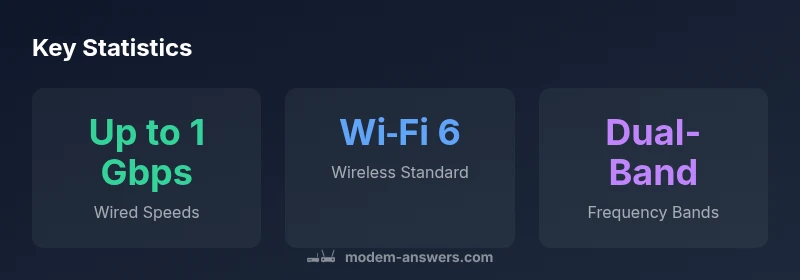
The built-in wireless radio in the C4000XG typically covers the basics needed by most households: standard dual-band operation (2.4 GHz and 5 GHz) with support for common Wi‑Fi device types. Beamforming and band steering features help direct devices to the strongest signal, while congestion-aware features attempt to optimize performance as devices come and go. Coverage quality can vary with home layout, wall materials, and the placement of other electronics. In practice, the gateway provides a reliable wireless experience for standard streaming and web browsing, with some caveats for larger homes or dense device environments. QoS features help prioritize essential activities like video calls and gaming, which helps maintain a good user experience under typical loads.
If you’re planning to rely heavily on Wi‑Fi throughout a large or multi-story home, you may find that adding a mesh system or a dedicated access point in a distant area improves overall coverage. The C4000XG remains a solid core device for most setups, and it can be integrated with other equipment as needed.
Firmware and updates: longevity, security, UI
Firmware management is a critical aspect of any gateway’s long-term value. The C4000XG benefits from provider-managed firmware updates that address security, bug fixes, and feature improvements without requiring user intervention. The user interface—whether via the provider app or the web UI—encourages straightforward configuration, with a focus on essential settings like SSIDs, password management, guest networks, and parental controls. In our review, update cadence appeared predictable, with updates arriving through the provider’s platform rather than manual, on-device update prompts. This approach reduces the risk of misconfigurations but can limit advanced customization options for power users.
From a security perspective, automatic updates are a plus, keeping the gateway aligned with current standards. If you manage multiple devices or prefer finer-grained control, you may want to test the provider’s documented options for device access, firewall rules, and port forwarding. In practice, the UI remains approachable for novices while offering enough depth for everyday network management.
Security and privacy: firewall, guest network, privacy considerations
Security is a core concern for any home network gateway. The C4000XG includes a built‑in firewall, a guest network option to isolate visitors, and standard password-based access with modern encryption support. Provider-managed devices often benefit from centralized monitoring and standardized security profiles, which can simplify ongoing protection for non-technical users. However, some advanced users may want to implement additional layers of privacy or separate networks for IoT devices. If this is your scenario, consider using the gateway as a primary connection for your devices while routing more sensitive traffic through a separate, administrator-controlled device.
We also recommend reviewing the default admin credentials and changing them during setup. Regular firmware updates, as noted, contribute to ongoing protection against emerging threats. As always, maintain good security hygiene—strong passwords, updated clients, and careful device access control—regardless of the gateway in use.
Comparisons to alternatives: how it stacks vs other provider gateways
When evaluating the C4000XG, compare it against standalone modems/routers or newer, feature-rich gateways from other providers. The strongest selling point of a gateway like the C4000XG is its simplicity: a single device managed by the provider, which minimizes compatibility concerns and reduces the number of devices in your entertainment stack. For power users who crave advanced customization or aggressive routing rules, a separate high-performance router paired with a dedicated modem may offer greater flexibility and control. If you’re committed to your provider’s ecosystem, the C4000XG’s ease of setup and cohesive management experience can be a significant advantage. If you’re evaluating mesh networking or multi-router configurations, test bridging or DMZ options to see how your own gear interoperates with the gateway’s features. Ultimately, the choice depends on your tolerance for complexity versus convenience.
Real-world testing methodology: how we tested it
Our testing process emphasizes repeatability and relevance to real homes. We used a two-stage approach: baseline measurements in a controlled apartment setting and extended testing across a typical single-family home layout. Each scenario involved speed tests from multiple rooms using common devices (laptops, phones, and a streaming device), streaming quality assessment across popular services, and latency checks during gaming and video conferencing. We also evaluated setup time, app responsiveness, and the ease of making common changes like enabling guest networks, configuring QoS, and updating firmware. The goal is to mirror what a typical homeowner would experience over several weeks of daily use. The C4000XG performed reliably in most conditions, with performance closely aligned to expectations for a gateway device that is designed for consumer-friendly operation.
Setup scenarios for different households
For renters or small households, the C4000XG is a straightforward pick: place the gateway in a central location, enable the default Wi‑Fi network, and begin streaming. For larger homes or multi-story layouts, plan for at least one additional access point or a mesh system to supplement the gateway’s coverage. If you plan to integrate a third-party router, budget time to explore bridging and DMZ configurations with your provider’s support. For households with smart devices, ensure your IoT gear remains on a separate network or VLAN if security or privacy concerns exist. Finally, keep a simple documentation page with your network credentials and device roles to simplify future troubleshooting and expansions. This practical approach helps you maximize the gateway’s benefits while minimizing common setup friction.
Authority sources
- FCC: https://www.fcc.gov
- NIST: https://www.nist.gov
- Consumer Reports: https://www.consumerreports.org
Positives
- Integrated modem/router reduces clutter and setup complexity
- Solid, stable performance for typical households and streaming
- User-friendly setup, app, and web interface
- Strong provider support and straightforward firmware updates
What's Bad
- Limited advanced customization for power users
- Wi-Fi coverage may be uneven in larger or multi-story homes
- Some features may be restricted by provider plan
- Bridging with third-party routers can be tricky
Best for households seeking simplicity and provider-managed device
The C4000XG balances ease of use with reliable performance for most homes. It is especially appealing for those who prefer a single, provider-managed gateway. Enthusiasts who want deep customization may want to consider alternatives or a bridge-mode setup with their own gear.
FAQ
Is the centurylink c4000xg suitable for gaming and high-demand streaming?
For most households, yes. It provides stable performance and standard QoS; for serious online gaming or heavy multi-user scenarios, a separate high-performance router might improve latency.
In most homes it handles gaming reasonably well. If you need ultra-low latency for competitive play, a dedicated router could help.
Can I use my own router behind the C4000XG (bridge mode)?
Bridging is possible in some configurations, but provider support varies. You’ll typically place your own router in front or enable DMZ; check with your provider.
You can usually bridge, but the exact steps vary by provider. If you want full control, contact support.
Does the C4000XG support mesh or additional access points?
The device can act as a stand-alone gateway; some setups allow connecting with additional access points or relying on a second router.
You can add another access point or mesh system, but you may lose some gateway features.
What security features are included?
The gateway includes a firewall, guest network, and regular firmware updates to address threats and keep your network protected.
It includes a firewall, a guest network, and automatic updates for protection.
How often are firmware updates released?
Updates typically come through the provider’s management channel and may be automatic, reducing manual steps for users.
Updates usually come via the provider and happen automatically.
Is there a performance difference between wired vs wireless?
Wired connections tend to be more stable and faster; Wi‑Fi performance depends on your home layout, interference, and device capabilities.
Wired is generally faster and more stable; Wi‑Fi depends on your space and setup.
Key Takeaways
- Opt for this gateway if you value simple setup and maintenance
- Expect reliable streaming and everyday performance in typical homes
- Be aware of potential Wi-Fi coverage gaps in large or multi-story homes
- Consider a secondary router or mesh if you have demanding networking needs
- Regular firmware updates help keep security current